
Add us as your preferred source on Google to see more of our content in Search.
 Add to Preferred Sources
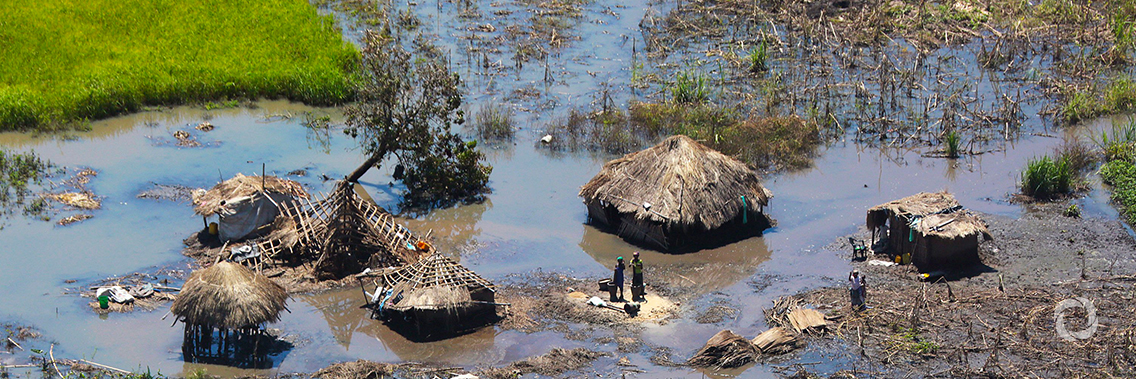
The lives and livelihoods of farmers and fishers in the three Southern African countries hit by Tropical Cyclone Idai are under severe threat, with communities in Mozambique bearing a particularly heavy burden.
For a country where 80 percent of the population depends on agriculture, keeping animals alive, rehabilitating damaged land and rebooting food production will be critical as the waters recede, FAO said.
Significant swathes of the cropland were flooded on the eve of the April-May maize and sorghum harvest. Most of the losses are expected in Mozambique’s Manica and Sofala provinces, which normally contribute approximately 25 percent of national cereal output.
Prior to the current disaster, 1.8 million people in Mozambique were already severely food insecure, a figure that could now rise as the extent of the damage becomes clear.
Having declared the response to Cyclone Idai in Mozambique a top priority, FAO is asking for an initial $19 million to support those most affected over the next three months, with a focus on resuming local food production, assisting fishing communities and supporting livestock owners.
“When the floodwaters recede, it will be crucial that the government, FAO and their partners get in fast”, said Olman Serrano, FAO’s Representative in Mozambique and coordinator of the Organization’s response to the crisis. “Once we have established how and how much land can be rehabilitated, we will procure and distribute seeds as a matter of urgency so that farmers can plant for the secondary agricultural season, which is starting now, in April.”
Serrano noted that FAO and its partners will also be helping farmers to get ready for the main agricultural season in September, which will be critical in terms of food security for the following months and into next year. More immediately, however, saving the remaining livestock that many households rely on for food and income is one of the highest priorities.
FAO’s emergency livestock response will include evacuating animals and assuring veterinary services and feed availability: the typical cost of saving one cow from starvation and disease is just around $50 while buying a replacement animal adds up to $600.
Also in need of immediate assistance and protection are fishers, their assets, and infrastructure. This is particularly the case in Beira, the port city that bore the brunt of the cyclone’s wrath and the centre of Mozambique’s fisheries industry, as well as the main port for importing over 1 million tonnes of wheat and rice annually.
Deployed to Mozambique in the aftermath of the disaster, Daniele Donati, Deputy Director of FAO’s Emergency and Resilience Division, noted that climate change certainly contributes to understanding the extreme nature of the cyclone, as well as to the approach towards humanitarian relief.
Original source: FAO
Published on 29 March 2019