
Add us as your preferred source on Google to see more of our content in Search.
 Add to Preferred Sources
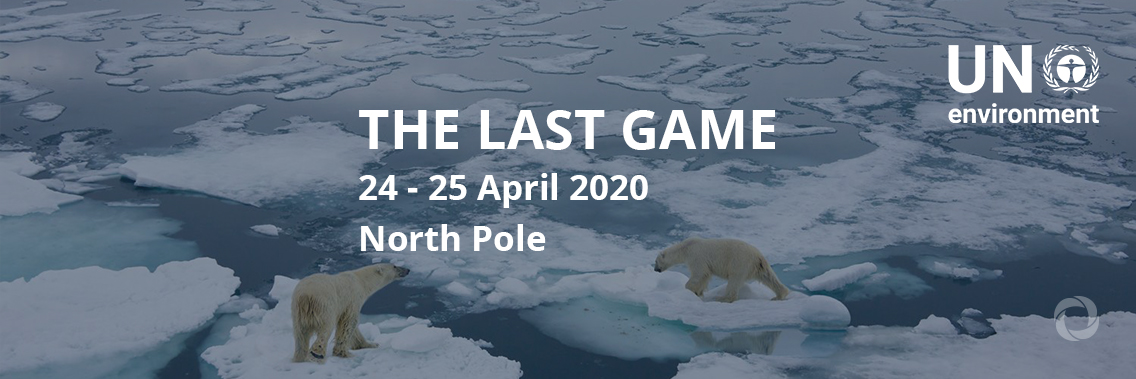
The Last Game was first scheduled for April 2019. To allow a proper preparation and conduct of the event with the intended strong outcome, and to take full advantage of the partnerships and linkages established, UN Environment had to annul the 2019 event.
Instead, together with our polar patron Slava Fetisov, we are now looking into moving the event by one year and using the year 2019 for a sequence of run-up events/matches, culminating with the North Pole game in April 2020.
The Arctic is one of Earth’s most fragile ecosystems, disproportionally affected by climate change and warming at twice the average rate of the rest of the planet. To garner global attention and support for the rapidly disappearing ice in the Polar regions, UN Environment is organizing “The last ice hockey game on the North Pole’.
The event, to be held on the North Pole in April 2019, is spearheaded by legendary Russian ice hockey player Viacheslav Fetisov, UN Environment Patron of the Polar Regions.
This symbolic ice hockey game aims at involving a great diversity of female and male players, including athletes from different disciplines and countries, Arctic indigenous peoples and youth. It will bring together sports and environment as agents of peace.
The Last Game is a contribution of UN Environment to the Paris Agreement implementation and is linked to the UN Secretary General’s Climate Summit.
The objectives of the Last Game:
- To demonstrate that the Arctic environment is very fragile and important for the well-being of all people on the planet.
- To emphasize the value of collaboration, friendship and peace.
- To raise attention to the rapid speed of global warming, which is changing the face of the Artic in such a way that it may become nearly ice-free during the summer by 2040.
- To showcase state-of-the-art possibilities of holding sports events with a minimum environmental impact, even in such an extreme setting.
VENUE:
North Pole
24 – 25 April 2020
Original source: UN Environment
Published on 01 April 2019