
Somalia: Humanitarian funds allocate US$45.7M for one of the most complex and long-standing humanitarian crises
Add us as your preferred source on Google to see more of our content in Search.
 Add to Preferred Sources
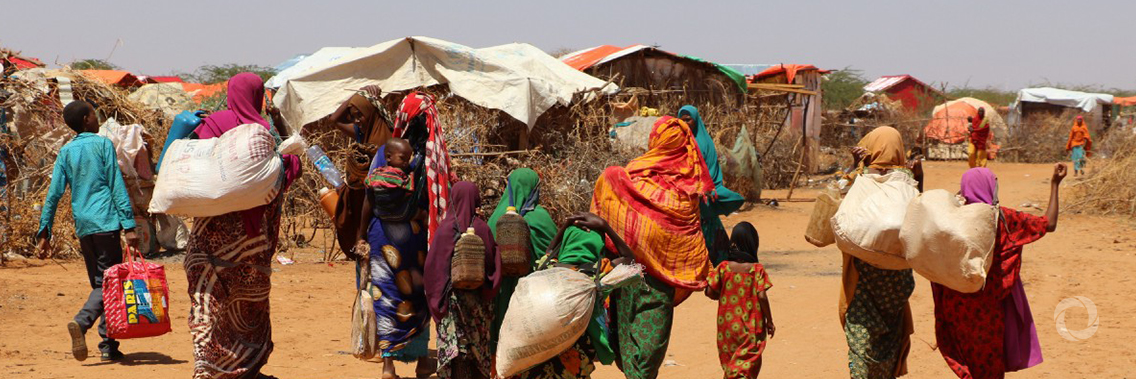
Somalia remains one of the most complex and long-standing humanitarian crises in the world. This year, over 4.2 million people require urgent humanitarian assistance. 4.9 million Somalis are estimated to be food insecure. Of those, over 1.5 million people face acute levels of food insecurity. 900,000 children are acutely malnourished.
2.6 million internally displaced persons (IDPs), marginalized communities and civilians in conflict-affected areas, have limited or no access to quality basic services. 2 million people are living in hard-to-reach, conflict-affected areas, primarily in the southern and central regions of Somalia. Accessibility of those in need is hindered by the presence of non-state armed actors, active conflict and insecurity, as well as limited infrastructure. This has resulted in the reduction in the presence of humanitarian partners as well as difficulty in the delivery of assistance.
Today, the UN Central Emergency Response Fund (CERF) and the Somalia Humanitarian Fund (SHF) have released a combined US$45.7 million to scale up life-saving assistance and reach the most vulnerable:
- The $12 million CERF allocation will boost the response in the worst affected parts of northern Somalia, where 823,000 people are facing severe food insecurity. The funds will be used for food assistance in Awdal and Woqooyi Galbeed regions, and nutrition, health, and water and sanitation and hygiene programmes in Sool, Sanaag and Bari regions.
- The $33.7 million SHF allocation will scale up protection, education and shelter support in northern Somalia, and other life-saving activities in central and southern Somalia. Most of the funding will go to national and international non-governmental organizations, while $700,000 will go to the UN Humanitarian Air Service, which helps move essential humanitarian goods and personnel.
“These allocations will enable humanitarian agencies in Somalia to deliver urgently needed food, clean water, health care and education support in the shortest possible time in areas where needs are the highest,” said UN humanitarian chief Mark Lowcock. “We will prioritise delivery to children, women, the elderly, and people living with disabilities, who have suffered terribly as drought and conflict continue to drive the crisis in Somalia.”
To date, the 2019 Somalia Humanitarian Response Plan, seeking $1.08 billion, is only 12 percent funded. With conflict, displacement and climatic shocks persistently causing high levels of humanitarian and protection concerns, life-saving assistance must be sustained alongside livelihood support.
The SHF allocation is the largest since 2012 and would not have been possible without early donor support. Germany has been the top donor to the Fund since 2017. Other top donors are Australia, Canada, Denmark, Ireland, the Republic of Korea, the Netherlands, Norway, Sweden, Switzerland and the United Kingdom.
Original source: UNOCHA
Published on 01 April 2019