
Add us as your preferred source on Google to see more of our content in Search.
 Add to Preferred Sources
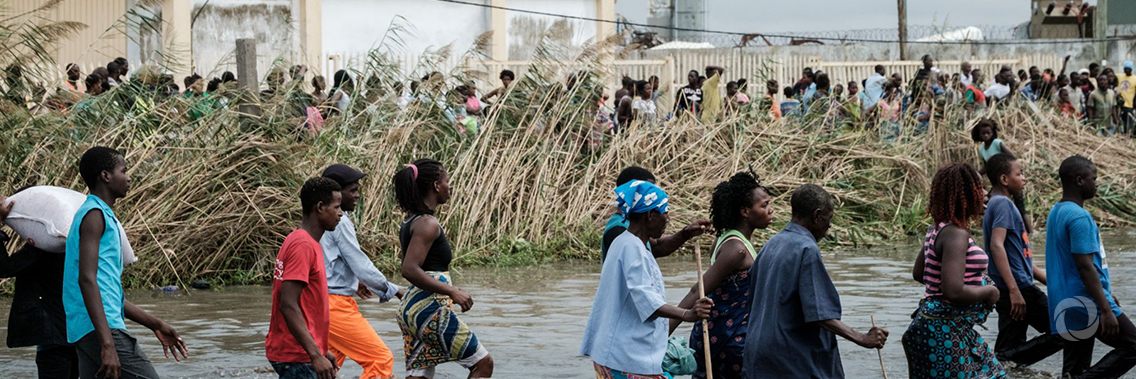
One month on since Cyclone Idai struck Mozambique on March 14, the United Nations World Food Programme has reached one million people with food assistance and continues to expand its emergency response while launching recovery and reconstruction interventions.
‘’In the immediate aftermath of the cyclone, people were so very desperate,’’ said Lola Castro, WFP’s Regional Director for Southern Africa. ‘’Thanks to the hard work and resourcefulness of the many involved, the speed and scale of the response has transformed that desperation into hope.’’
Working in close coordination with the government and the INGC, the national disaster management agency, WFP intends to assist a total of 1.7 million people requiring urgent food and nutrition support in the four most affected provinces (Sofala, Manica, Tete and Zambezia).
- The successful scale-up to date has been made possible by the generosity of donors, including those who provide unearmarked, flexible funding. However, WFP still requires US$130 million to be able to fully implement its response through June.
- People affected by the flood and cyclone are receiving up to 30-day rations of rice and maize meal, pulses, fortified blended food and vegetable oil. Where local markets are functioning, WFP distributions of food will increasingly give way to cash-based transfers (CBTs). Some 145,000 people are to receive support this way in April.
- An ongoing cholera outbreak, that has so far infected more than 5,000 people, threatens to worsen malnutrition. WFP is supporting three cholera treatment centers in Beira with food assistance.
- Planting for a second 2019 harvest in October-November must be completed in the coming days. The Food and Agriculture Organization (FAO) has begun the distribution of maize, bean and vegetable seeds, and of tools, to 14,700 smallholder farming families in Sofala and Manica provinces. WFP is supporting the effort by providing food assistance to the families to ensure seeds are planted rather than consumed.
Original source: WFP
Published on 16 April 2019