
Add us as your preferred source on Google to see more of our content in Search.
 Add to Preferred Sources
Traditional knowledge is at the core of indigenous identity, culture and heritage around the world, the chair of the United Nations Permanent Forum on Indigenous Issues said, stressing that it “must be protected”.
Indigenous peoples make up less than six percent of the world’s population but account for 15 percent of the poorest on earth. They live in some 90 countries, represent 5,000 different cultures and speak the overwhelming majority of the world’s estimated 6,700 languages.
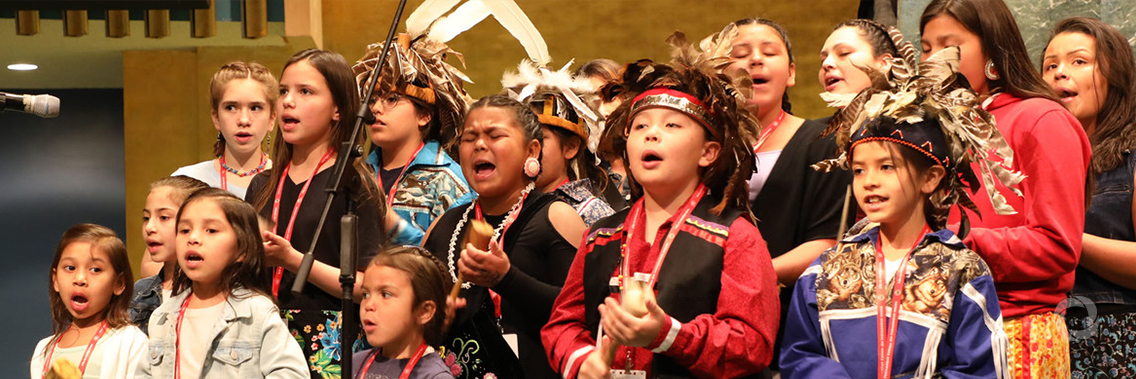
Noting that 2019 is the International Year of Indigenous Languages, Anne Nuorgam, who is a member of Finland’s Saami Parliament and head of the Saami Council’s Human Rights Unit said that “we have to celebrate our languages, but also take concrete action to preserve them and save those on the verge of extinction”.
As studies show that children learn best in their own mother tongue, Ms. Nuorgam encouraged everyone to “make sure our children” are connected to their indigenous communities and cultures, as they are “inextricably linked to their lands, territories and natural resources”.
Recognizing UNDRIP as a “watershed moment” in 2007, General Assembly President Maria Fernanda Espinosa lamented that it still faced implementation challenges, saying that the world has a “historic debt with the indigenous peoples” and that much more must be done to overcome the implementation gap.
She also drew attention to indigenous women, pointing out that while women are key agents of change for tackling poverty and hunger, they face multiple forms of discrimination and violence.
Original source: UN News
Published on 22 April 2019