
UN humanitarian leaders highlight urgent need to sustain support for Rohingya refugees in Bangladesh
Add us as your preferred source on Google to see more of our content in Search.
 Add to Preferred Sources
At the end of a joint visit to Bangladesh, three top United Nations officials – the United Nations Under-Secretary-General for Humanitarian Affairs and Emergency Relief Coordinator Mark Lowcock, Director General of the International Organization for Migration (IOM) António Vitorino, and UN High Commissioner for Refugees Filippo Grandi – reiterated their commitment to keep working toward safe and sustainable solutions for Rohingya refugees in Myanmar and noted the UN efforts there to help create conditions conducive to return.
Meanwhile, they called on the international community to continue supporting the critical needs of 1.2 million people in south-eastern Bangladesh, mostly Rohingya refugees but also including generous host communities.
After visiting the refugee camps in Cox’s Bazar and meeting with different refugee groups, they also highlighted the critical importance of supporting the Rohingya during their time in exile, in particular by expanding opportunities for learning and skills training. They noted that almost half of the 540,000 refugee children under the age of 12 are currently missing out on education altogether, while the remainder have access only to very limited schooling. Only a handful of teenage children are currently able to access any form of education or training.
“This remains one of the world’s biggest refugee crises,” said Filippo Grandi. “There are more than 900,000 Rohingya refugees in Bangladesh, most of whom fled Myanmar in 2017. I saw a great deal of progress, but their situation, especially for women and children, remains fragile. With the current crisis almost two years on we must give refugees the chance to learn, build skills and contribute to their communities while also preparing for reintegration when they can return to Myanmar,” said Grandi. “The future of the Rohingya refugees hangs in the balance.”
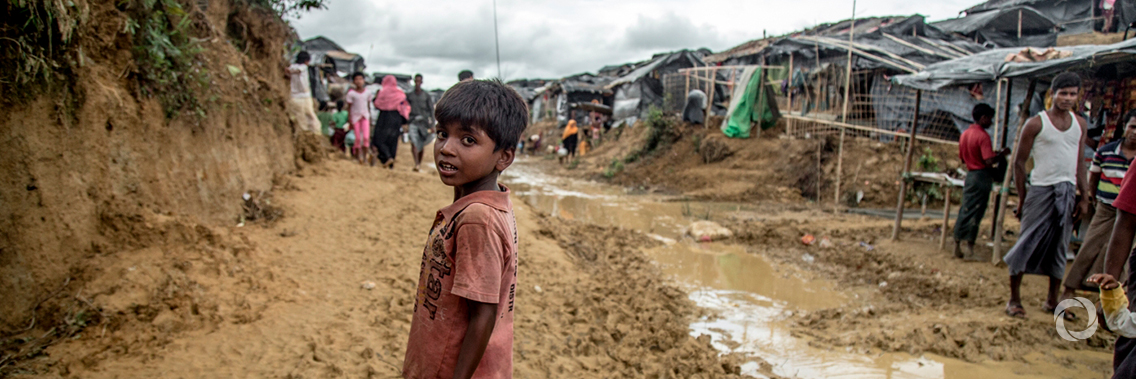
The visit also came just ahead of the cyclone period, which is followed by the monsoon season. Both pose serious risks, including flooding, landslides and disease outbreaks, to thousands of already vulnerable women, men and children.
The UN leaders discussed with the Government ways the international community can further support preparedness and response efforts. While in the camps, they also assessed the ongoing work that has been undertaken to address weather-related risks, including the strengthening of shelters, the improvement of infrastructure, and the training of volunteers. They recognised the critical role the refugees themselves are playing in these efforts.
In their meetings with refugees, the humanitarian leaders were also reminded of the harrowing circumstances refugees fled from and were encouraged by their resilience.
Original source: UNHCR
Published on 26 April 2019