
Add us as your preferred source on Google to see more of our content in Search.
 Add to Preferred Sources
Four years after temperatures hit the high forties in India, claiming over 2,000 lives, parts of the country are again baking in intense, and deadly, heatwaves. Throughout April and into May, the states of Madhya Pradesh, Maharashtra and Rajasthan have seen daily highs of 42°C.
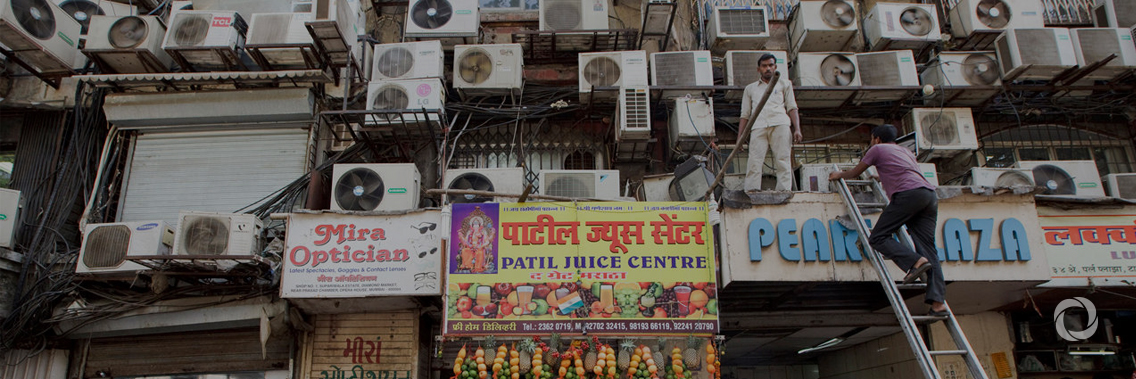
As climate change increases, such temperatures are becoming the new normal. Combined with economic growth and urbanization, this brings a huge growth in cooling demand. The number of air conditioners in India is expected to rise from 15 million in 2011 to 240 million in 2030.
Cooling isn’t just about protecting against extreme temperatures. A recent study from the UN’s Sustainable Energy for All initiative puts India in the top nine countries at greatest risk from lack of access to cooling technology that also keeps food fresh, vaccines stable and children in education.
To give just a few examples, a quarter of vaccines in India arrive damaged because of broken or inefficient cold chains, while only four percent of fresh produce is transported in refrigerated vehicles, leading to economic losses of US$4.5 billion annually.
Aware of these worrying statistics, the government launched earlier this year the India Cooling Action Plan, the first such holistic plan from any national government.
“Cooling is a developmental need, yet India has one of the lowest levels of access in the world,” says CK Mishra, Secretary at the Ministry for Environment, Forest and Climate Change. “To support economic growth and improve resilience, it is inevitable that India will embrace cooling.
“The plan recognizes the significant role of accelerated action on building and appliance efficiency, and the economic and environmental benefits of new technologies such as thermal storage and district cooling.”
By 2038, the plan aims to reduce cooling demand by up to 25 percent, refrigerant demand by 25–30 percent and cooling energy requirements by up to 40 percent. It aims to double farmers’ incomes by improving the cold chain and so wasting less food.
These are big goals, but experts believe India’s plan is sensible and achievable.
The plan doesn’t just look at efficiency. It prioritizes other solutions, such as passive cooling, building design, fans and coolers, new technologies and behavioral change. Among the new technologies is district cooling—the distribution of cooling energy from a central plant to multiple buildings.
The Ministry of Environment, Forests and Climate Change is co-chair of the UN Environment-led District Energy in Cities Initiative, which is working with three pilot cities—Amaravati, Rajkot and Thane – in India to demonstrate these technologies. Three-quarters of the buildings required for 2030 have yet to be built, so there is a huge opportunity for new urban developments to use district cooling, which can be up to 50 percent more efficient than stand-alone solutions.
These kinds of actions provide hope that we can help keep everyone, and the planet, cool.
Original source: UN Environment
Published on 17 May 2019