
Artificial intelligence summit focuses on fighting hunger, climate crisis and transition to ‘smart sustainable cities’
Add us as your preferred source on Google to see more of our content in Search.
 Add to Preferred Sources
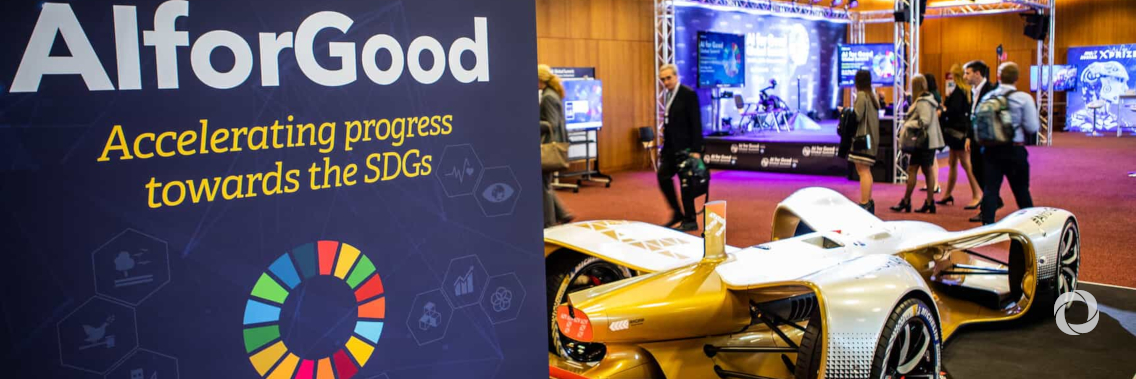
Artificial intelligence, or AI, is at the forefront of fighting hunger, mitigating the climate crisis and facilitating “the transition to smart sustainable cities”, said the chief of the UN agency which specializes in information and communication technologies, Houlin Zhao, kicking off the third AI for Good Global Summit in Geneva.
“This summit is the leading United Nations platform for dialogue on artificial intelligence”, explained the Secretary-General of the International Telecommunication Union (ITU), adding that it “also raises complex questions about privacy and trust and poses other challenges, from job displacement and potential bias in algorithms to autonomous weapons and social manipulation”.
More than 2,000 participants from over 120 countries joined AI leaders and humanitarian actors to highlight its potential for advancing education, healthcare and wellbeing, social and economic equality and space research.
Unable to attend in person, Secretary-General António Guterres sent a message lauding “the promise” of AI while also warning against its potential dangers.
“If we are to harness the benefits of artificial intelligence and address the risks, we must all work together – Governments, industry, academia and civil society – to develop the frameworks and systems that enable responsible innovation”, he said. “These systems must be nimble and adaptable, capable of developing norms and self-regulation standards alongside legally binding laws and instruments when needed, as in the case of lethal autonomous weapons”
Guided by its inter-disciplinary audience, this year’s summit aims to generate ‘AI for Good’ projects and ensure that associated technologies will be developed safely, allowing equal access for all.
Organized by the International Telecommunication Union (ITU) – in partnership with the XPRIZE Foundation, the Association for Computing Machinery (ACM) and 37 UN entities – the summit, which will run from 28-31 May, aims to identify practical applications of AI to accelerate the UN Sustainable Development Goals.
It will also debate unintended consequences of the AI revolution, and propose actions for high-potential solutions in achieving global scale, along with a so-called “learning day” to offer an audience with leading AI experts and educators.
What is clear to ITU chief Zhao is that “no one nation, no one organization, no one company and no one community can meet these challenges alone”.
“The path to a transformative but also a safe, trusted and inclusive AI will require unprecedented collaboration between government, industry, academia and civil society”, he concluded.
Original source: UN News
Published on 28 May 2019