
Add us as your preferred source on Google to see more of our content in Search.
 Add to Preferred Sources
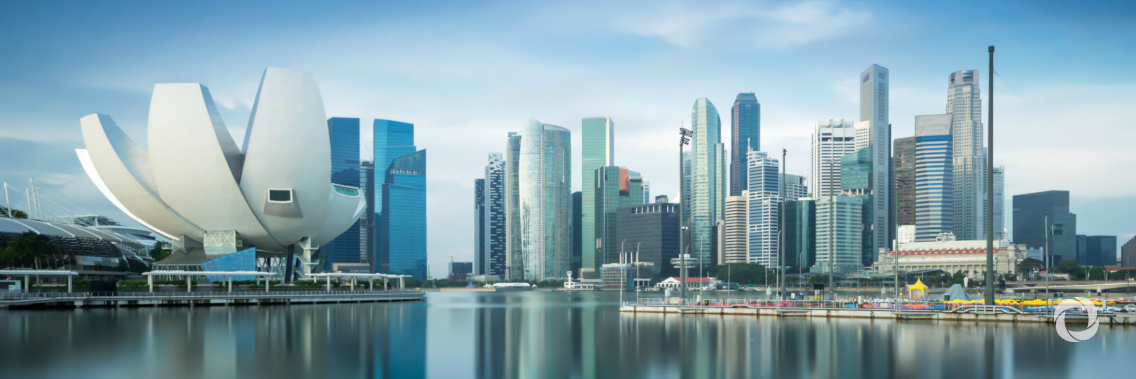
Singapore, host of this year’s Innovate4Climate (I4C) conference, is one of the world’s leading cities for climate-smart urban development.
In the lead-up to this year’s I4C event, here are four elements of climate-smart urban development worth knowing.
First, cities can play an important role in climate-smart development
Today, 55 percent of the global population lives in urban areas. This figure is forecast to increase to 68 percent by 2050 – adding 2.5 billion additional people to cities. Over the next 35 years, more than 1.2 billion people in all, or one-third of the world’s urban population, are expected to live in Asian cities alone.
Cities across the world are major contributors to global emissions. Today, it is estimated that cities account for more than 70% of all global CO2 emissions each year – more than 25 billion tons. This is the equivalent of more than 5 billion cars on the road. As these cities grow, so too will their carbon footprint, in the absence of concrete action to help improve urban development.
Building cities that “work” – inclusive, safe, resilient, and sustainable – requires intensive policy coordination and investment choices. Many cities are already at the forefront of innovative climate solutions, ranging from policies to reduce emissions through transit-oriented development and energy efficiency efforts to building more resilient urban infrastructure that can better withstand the impacts a changing climate.
Second, the populations and emissions of Asian cities are growing fast
Asia’s cities already consume 80% of the region’s energy and create 75% of its carbon emissions. Asian cities are poised to contribute more than half the rise in global emissions over the next 20 years if no action is taken.
India and China, for instance, are two of the three countries that will account for 35 percent of the world’s projected urban population growth by 2050. Without action, this rapid growth will also lead to increasing emissions.
Third, Asian cities can also play a significant role in combating climate change
While high pollution levels of Asian cities tend to capture global attention, many cities in the region are also at the forefront of climate-smart policies, innovations, and investment. Emerging market cities in Asia and around the world have the opportunity to leapfrog historic approaches to urban development, instead putting in place resilient, green infrastructure for coming generations.
For instance, by 2020, Beijing plans to replace over 70,000 gasoline and diesel taxis with electric vehicles. Seoul is aiming to add 2000 km of bike paths and create 250 pedestrian zones. Hanoi plans to generate electricity from its biggest landfill, which will reduce emissions and generate electricity.
Fourth, Singapore, host of I4C, excels at climate-smart urban development
With nearly 8,000 people per square kilometer, Singapore has the world’s third highest population density. Singapore is a prime example of how innovation, technology, and strategic urban development can meet urban development and climate demands. In addition to hosting the world’s largest underground district cooling network in the world, the country is also home to the Semakau landfill: an offshore landfill and a model for climate-smart development. The landfill deploys an innovative waste disposal design, comprising silt screens to protect the surrounding coral and an impermeable layer to deter leaching, ensuring that the man-made island remains habitable for a diverse range of marine life. An onsite waste-water treatment plant also ensures that excess water is treated before being discharged into the surrounding sea. The site is so clean and efficient that it is a popular tourist attraction!
An additional way the country is utilizing the surrounding sea as it develops is the introduction of the country’s largest offshore floating solar panel system, expected to go online later in 2019. This five-hectare facility is expected to generate more than 6,000 megawatts of power and will help to reduce more than 2,000 tons of greenhouse gas emissions every year – while not occupying a single centimeter of precious land, a scarce resource for the tiny nation.
I4C looks forward to learning from Singapore and sharing their climate-smart experiences with the world.
Original source: World Bank
Published on 31 May 2019