
Add us as your preferred source on Google to see more of our content in Search.
 Add to Preferred Sources
Kickstarting the World Environment Day celebrations in India, a comprehensive action plan to control air pollution was launched in Agra, one of India’s most polluted cities and home to the majestic Taj Mahal.
The comprehensive Action Plan covers vehicle emission control, suspension of road dust, emission control such as biomass, crop residue, garbage and municipal solid waste burning, industrial emissions, air pollution from construction and demolition activities and monitoring of air quality, among others.
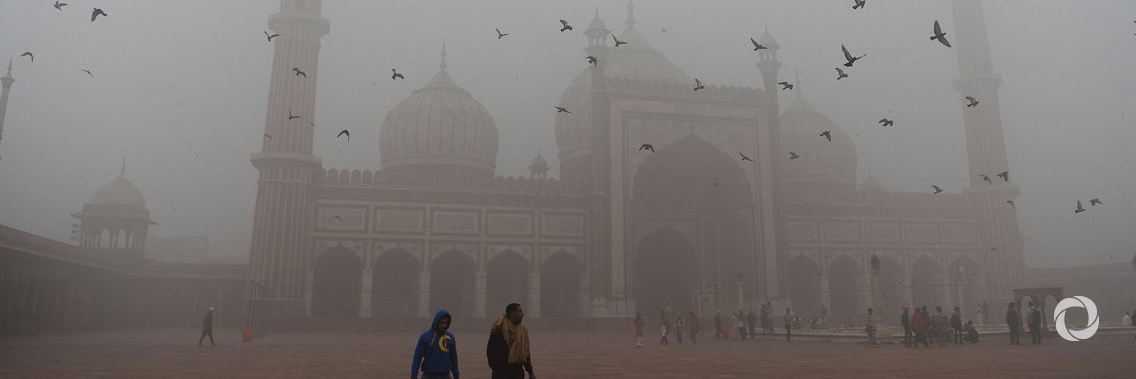
The city’s tourism industry has hit a major low for the past few years owing to aggravated air pollution, which causes the discoloration of the Taj Mahal. The Supreme Court of India had directed the government to take a slew of measures to tackle Agra’s growing air pollution woes.
Senior officials present at the launch emphasized the importance of the action plan in laying a definitive roadmap for other Indian cities in mitigating air pollution.
In order to cut vehicular emissions, Uttar Pradesh Government plans to roll out 650 electric buses, out if which more than 100 have already been procured. Various private sector players offered their support in combatting pollution on various fronts. To help deal with Agra’s mounting plastic waste, Massive Fund proposed a project of $30 million under the Alliance to End Plastic, to eliminate more than 90 percent of plastic waste from Agra. Waste management firm Geocycle further proposed to pilot a technology to clean up the Yamuna river in Agra. Kanoria Industries plans to invest Rs.15,000 crore for sustainability-related activities in the city.
“This action plan is a decisive step forward in systematically combatting air pollution. Preventive actions and local-scale compliance enforcement tools, uniquely designed as an agreement between local government and private sector, could contribute significantly to a successful implementation of the plan and sustainability in the long term,” said Atul Bagai, Head, UN Environment, India.
The Ministry of Environment Forests and Climate Change launched the National Clean Air Programme earlier this year to meet the prescribed annual average ambient air quality standards for 102 non-attainment Indian cities by 2025, Agra city is one of them. The Agra city action plan can guide other NCAP cities into devising strategies to combat air pollution and associated health risks.
Original source: UN Environment
Published on 03 June 2019