
Add us as your preferred source on Google to see more of our content in Search.
 Add to Preferred Sources
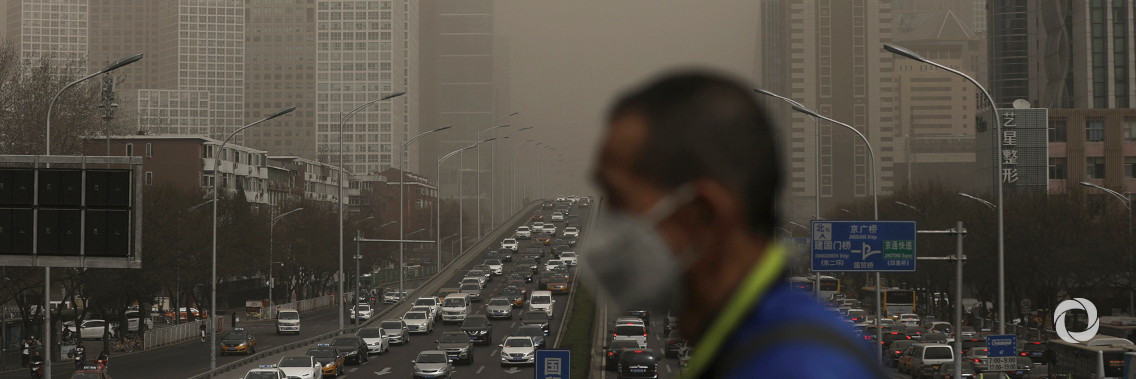
In the Beijing-Tianjin-Hebei region, home to 110 million people, Hebei contributes the most to air pollution, responsible for 70% of PM 2.5 emissions, an air pollutant that poses the greatest health risk. The province has the highest annual average concentrations of PM 2.5.
Hebei’s air pollution challenges are the result of a large concentration of highly polluting industries and vehicles, coupled with a large agricultural sector. For example, Hebei is the largest iron and steel producer in China, accounting for about one-quarter of the national output, and an important producer of cement and flat glass. Most of the power plants in the province are coal-fired. In 2014, coal accounted for nearly 90% of its total energy consumption.
Hebei has thus been a key battlefield in China’s war on air pollution. In 2013, the provincial government announced a five-year action plan outlining a series of measures to reduce air pollution and win the battle for blue skies.
In 2016, the World Bank approved a US$500 million loan to support the implementation of these measures, adopting the Program-for-Results (PforR) lending tool which links loan disbursements to tangible results on the ground.
To reduce emissions from key industrial sectors, Hebei has issued the most stringent industrial emission standards in the country. A continuous emission monitoring system has been established to track and enforce compliance by all industrial enterprises in the province.
Data collected through the system is now also used by the government to analyze emission trends and inform policymaking. A public information channel on the Ecology and Environment Bureau’s official website allows anyone interested to check emission information on any one company.
To cut transport emissions, more than 4,000 diesel buses have been phased out and replaced by electric buses in the province. In Shijiazhuang, the provincial capital, electric buses now make up more than half of the city’s public bus fleet, with the rest fueled by liquified natural gas.
The World Bank-funded program has targeted and supported the implementation of the priorities in Hebei’s air pollution action plan, and also addressed some sources of emissions that tend to be overlooked but could make substantial impact, for example, improving fertilizer use efficiency in agriculture.
Original source: World Bank
Published on 05 June 2019