
Only 6 per cent of children in Africa live in areas where air pollution is reliably measured at the ground-level
Add us as your preferred source on Google to see more of our content in Search.
 Add to Preferred Sources
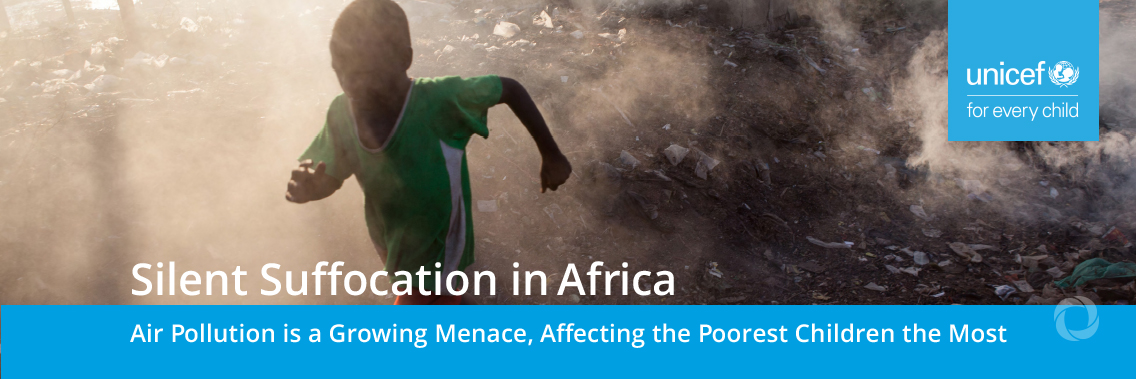
Only 6 percent of children in Africa live in areas where air pollution is reliably measured at ground-level, leaving half a billion children across the continent living in areas with no reliable means of measuring air quality, according to a new UNICEF report released on World Environment Day.
For babies and young children, breathing particulate air pollution is extremely harmful to their health and development, as it can cause permanent damage to brain tissue and lungs. UNICEF warns that since air pollution is not monitored in Africa to the same extent as other parts of the world, we are not only potentially underestimating the severity of the impact – we might also be underestimating its scope. In Europe and North America, 72 percent of children live where air pollution is so measured, 43 percent in Asia, and 25 percent in South America.
The report notes that air pollution is a growing challenge for Africa. Air pollution also impacts ecosystems – vital to livelihoods and health – as well as food crops. A recent study noted in the report estimates the economic cost of premature deaths from outdoor air pollution across Africa to be $215bn.
Without ground-level monitoring stations that reliably measure air quality, Africa’s children are increasingly at risk of unwittingly breathing air that is toxic for their health and brain development, and the ability to devise effective responses is greatly compromised.
“Air pollution is a silent killer of children. And in Africa especially, we know the problem is severe, we just don’t know how severe,” said UNICEF Executive Director Henrietta Fore. “Reducing children’s exposure to pollutants – and therefore reducing the damage to children’s health and early brain development – begins with a reliable understanding of the quality of the air they are breathing in the first place.”
To understand the full extent of the problem, UNICEF urges governments to put in place permanent and high-quality ground-level monitoring stations as public goods. When combined with satellite imagery, such stations would form the backbone of a system that would help improve the reliability of less precise monitoring stations that capture variations across cities.
Noting some of the ways to reduce air pollution – as well as children’s exposure to it in the first place – UNICEF urges governments to:
- Invest in renewable sources of energy to replace fossil fuel combustion; provide affordable access to public transport; increase green spaces in urban areas; provide cleaner cooking and heating solutions, and create better waste management options to prevent open burning of harmful chemicals.
- Prevent children’s exposure to air pollution, including by creating smart urban planning so major sources of pollution are not located near schools, clinics or hospitals; and minimize exposure in the home.
- Improve children’s overall health to improve their resilience. This includes the prevention and treatment of pneumonia, as well as the promotion of exclusive breastfeeding and good nutrition.
Read and download the UNICEF report: Silent Suffocation in Africa
Original source: UNICEF
Published on 04 June 2019