
26,000 residents from poor neighborhoods of Greater Buenos Aires to access more services and infrastructures
Add us as your preferred source on Google to see more of our content in Search.
 Add to Preferred Sources
The World Bank Board of Directors approved a US$ 100 million loan to provide additional financing to the Metropolitan Buenos Aires Urban Transformation Project to improve living conditions and basic services in three underserved neighborhoods.
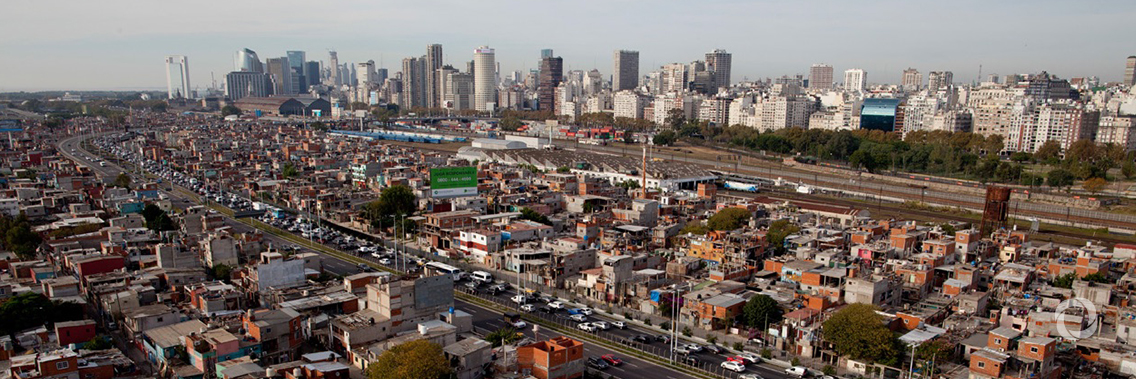
The project supports the implementation of the provincial government’s Plan for the Socio-Urban Integration of Precarious Villas and Settlements. Specifically, it will finance interventions in Villa Itatí and Villa Azul in the Municipality of Quilmes and in the Carlos Gardel neighborhood of Morón Municipality.
The project will finance comprehensive investments in basic infrastructure, housing, public spaces and community equipment, as well as activities to strengthen social capital and opportunities for social, labor and productive development. The project will also support activities for institutional strengthening and capacity-building to replicate these interventions in other underserved neighborhoods.
In Argentina, there are approximately 4,416 informal settlements with a total population of 4 million. Of these, 1,020 are in Metropolitan Buenos Aires, where one of every four households has no access to running water, and one of every two lacks sanitation services.
“This project seeks to generate opportunities and improve the inclusion of the most disadvantaged families, who are in a situation of social and environment vulnerability on a daily basis,” said Jesko Hentschel, World Bank director for Argentina, Paraguay and Uruguay.
The socioeconomic situation in Villa Itatí and Villa Azul is fragile: about 83 percent of the population has unmet basic needs and the unemployment rate stands at 14 percent – nearly double the average for Metropolitan Buenos Aires. There are no sewage systems or access to drinking water, and electric power connections are informal and precarious. With respect to the Carlos Gardel neighborhood, over 67 percent of households are considered poor or indigent in terms of monthly income.
Original source: World Bank
Published on 18 June 2019