
Add us as your preferred source on Google to see more of our content in Search.
 Add to Preferred Sources
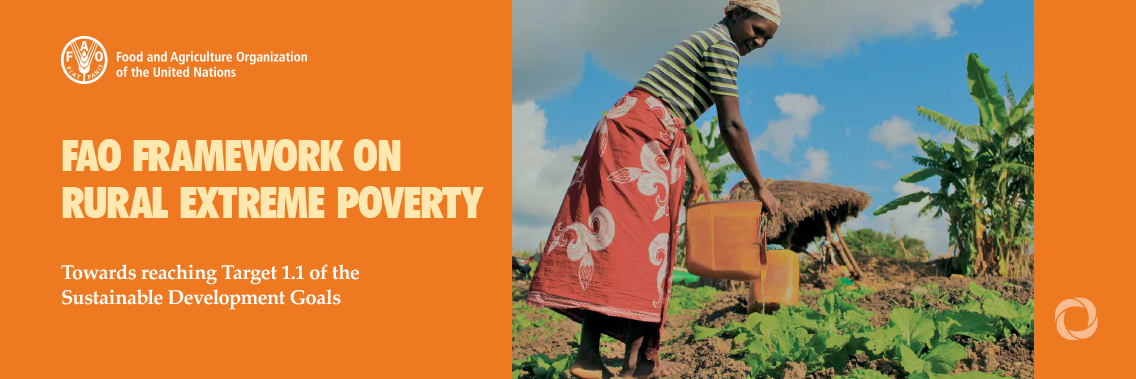
FAO has launched a new Corporate Framework on Rural Extreme Poverty to accelerate the UN agency’s and its partners’ efforts towards eradicating extreme poverty for all people by 2030 – target 1.1 of Sustainable Development Goal 1 – end poverty.
Since 1990, global progress on poverty reduction has been unprecedented. Today, however, about 736 million people – 10 percent of the global population – are still living in extreme poverty, which is currently measured as people living on less than $1.90 a day.
Also, inequalities persist and a continuing global slowdown in economic growth is expected to impede or even reverse progress towards poverty reduction, particularly for rural areas in the poorest countries.
Given these trends, FAO believes that more needs to be done to reach the extreme poor who live predominantly in rural areas.
“FAO is stepping up its efforts to end extreme poverty. This is important as it will also bring us closer to ending hunger and malnutrition and reaching other SDGs. When the extreme poor have means to improve their lives, they no longer suffer from hunger and can invest in a better future for their families and communities,” said FAO Director-General José Graziano da Silva.
The framework puts forwards four priority areas for FAO’s work across 130 countries: ensuring food security and nutrition; promoting economic inclusion; fostering environmentally sustainable and resilient livelihoods; and preventing and protecting the extreme poor against risks and shocks.
The framework acknowledges that poverty can be measured over a number of dimensions – not only based on people’s income or spending power, but also on their health and educational status, access to services, living standards, and overall well-being.
The framework outlines the need to consider these different dimensions of poverty in FAO’s programmes, and enhance the organization’s policy support and partnerships with other agencies and institutions in order to create a more sustained and inclusive economic growth, and foster ways to better measure and address extreme poverty.
Original source: FAO
Published on 19 June 2019