
Add us as your preferred source on Google to see more of our content in Search.
 Add to Preferred Sources
At an event focusing on collective commitment to international humanitarian law, UN humanitarian chief Mark Lowcock talked about the challenges to international humanitarian law and ongoing efforts towards increased respect for the implementation of the existing law.
The Geneva Conventions of 1949 are among the most important treaties enshrining the principle that wars have limits. At the heart of international humanitarian law, they bring protection to persons not or no longer participating in hostilities — wounded and sick or shipwrecked combatants, prisoners of war, and civilians, with particular regard for women and children, civilians living under occupation, as well as internees.
Moreover, article 3 common to the four Conventions governs the protection of persons in non-international armed conflict, thus binding organized armed groups as well as States. Today all four Geneva Conventions are universally ratified. While many characteristics of armed conflict have shifted since the adoption of the Geneva Conventions in 1949, these treaties remain as relevant and applicable as ever.
“The conventions came out of arguably the worst experience that humanity at scale had ever gone through in the form of WWII”, UN humanitarian chief said at the event today. “In the light of such experience, there was a desire to put in different arrangements for the future. But as time passes and generations change, it is really important to remind everybody why the Geneva Conventions were put in place”.
The conventions have three important attributes:
- All states are party to them. There is no state that says ‘we don’t agree with this’
- The coverage is broad, so it includes wounded, sick, POWs, and civilians
- They aim to protect people not just in state-to-state conflict but also conflicts that are not international. They are intended to bind organised armed groups as well as armed states.
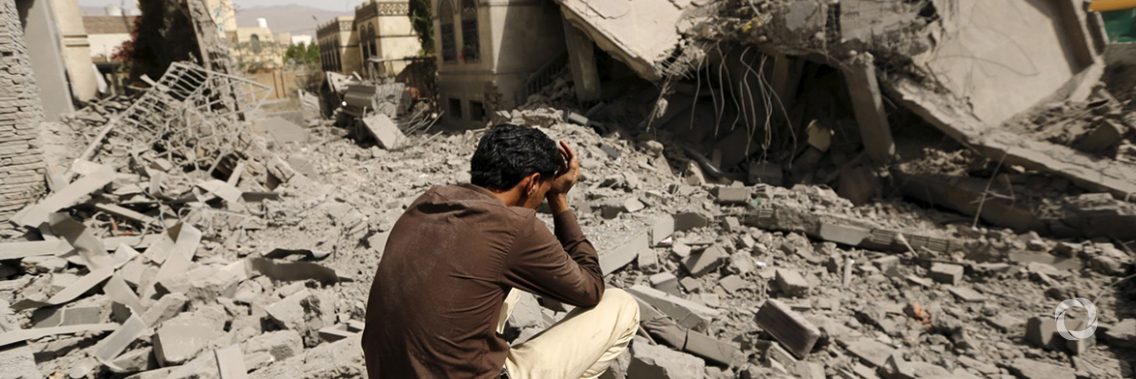
“We meet at a time when we the conventions face challenges. It is a jarring fact that after 60 years of broadly improving compliance with IHL, we have during the course of this decade seen a spike in violations. This is not because of weaknesses in the law, if anything the law has been strengthened with lots of additional agreements reached. But what we’ve seen is a decline in compliance.
Original source: UNOCHA
Published on 24 June 2019