
Add us as your preferred source on Google to see more of our content in Search.
 Add to Preferred Sources
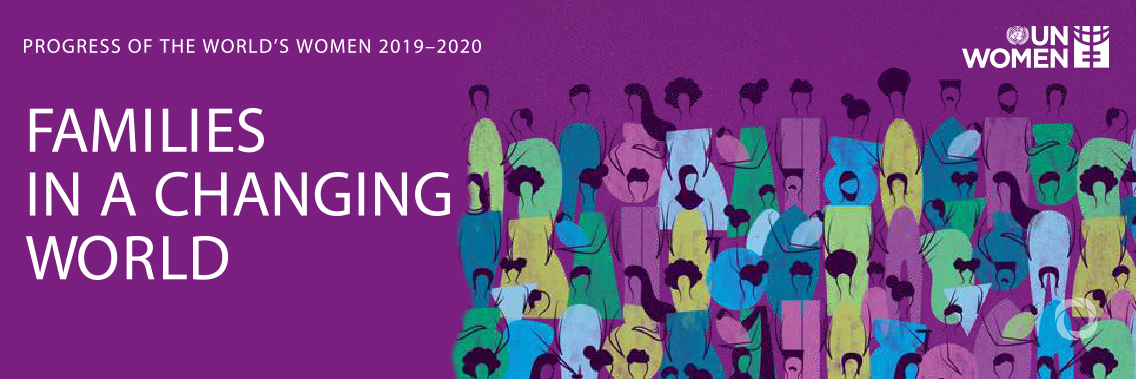
As women’s rights have advanced over the past decades, families around the world have become a place of love and solidarity but also one where fundamental human rights violations and gender inequalities persist, according to UN Women’s new flagship report, “Progress of the World’s Women 2019-2020: Families in a Changing World”.
“Around the world, we are witnessing concerted efforts to deny women’s agency and their right to make their own decisions in the name of protecting ‘family values’. Yet, we know through research and evidence that there is no ‘standard’ form of family, nor has there ever been,” said UN Women Executive Director, Phumzile Mlambo-Ngcuka. “This report counters that pushback by showing that families, in all their diversity, can be critical drivers of gender equality, provided decision-makers deliver policies rooted in the reality of how people live today, with women’s rights at their core.”
Anchored in global data, innovative analysis and case studies, the report shows the diversity of families around the world and provides robust recommendations to ensure that laws and policies support today’s families and meet the needs of all their members, especially women and girls, with analysis of what it would cost to implement them.
Among the trends observed:
- The age of marriage has increased in all regions, while birth rates have declined, and women have increased economic autonomy;
- Globally, a little over one third (38 percent) of households are couples living with children; and extended families (including other relatives) are almost as common (27 percent);
- The vast majority of lone-parent families, which are 8 percent of households, are led by women, often juggling paid work, child-rearing and unpaid domestic work. Same-sex families are increasingly visible in all regions.
As the report shows, families can be places of care, but can also bring conflict, inequality and, far too often, violence. Today, three billion women and girls live in countries where rape within marriage is not explicitly criminalized. But injustice and violations take other forms as well. In one out of five countries, girls do not have the same inheritance rights as boys, while in others (a total of 19 countries) women are required by law to obey their husbands. Around one-third of married women in developing countries report having little or no say over their own healthcare.
The report calls on policymakers, activists and people in all walks of life to transform families into places of equality and justice—where women can exercise choice and voice, and where they have physical safety and economic security.
Ensuring that families serve as a home for equality and justice is not only a moral imperative but essential for the achievement of the Sustainable Development Goals (SDGs), the world’s most comprehensive agenda to ensure human progress.
Read and download the report: Progress of the World’s Women 2019-2020: Families in a Changing World.
Original source: UN Women
Published on 25 June 2019