
Add us as your preferred source on Google to see more of our content in Search.
 Add to Preferred Sources
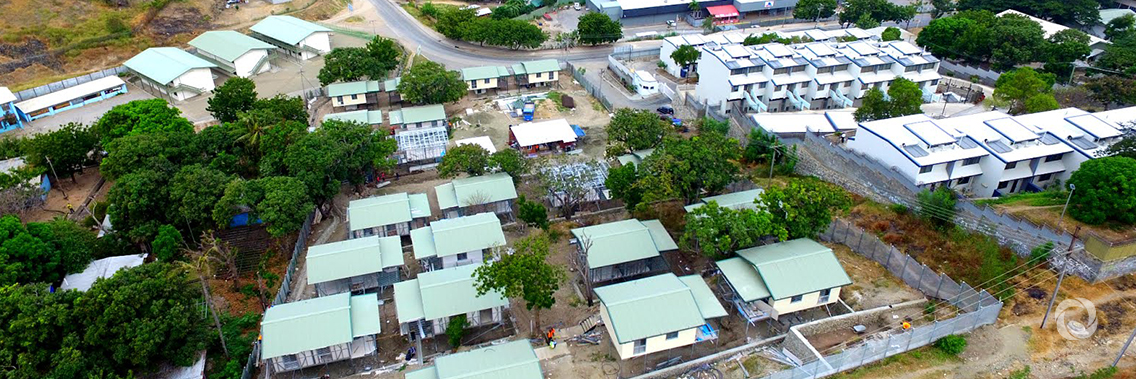
The Governor of Papua New Guinea’s National Capital District, Powes Parkop, has signed a landmark deal with IFC, the International Finance Corporation, to provide affordable, green and climate- resilient housing in the country’s capital, Port Moresby.
The deal, the first of its kind for Papua New Guinea (PNG) is aimed at demonstrating a model for large scale affordable housing for low and middle- income families in Port Moresby, to help ease the growth of the city’s informal settlements.
According to government statistics, over 45 percent of the 370,000 residents of Port Moresby live in informal settlements without the security of title or access to basic infrastructures, such as water, sanitation and power.
With more people moving from rural areas to the city, informal settlements are growing fast and are expected to shelter almost 60 percent of the population by 2030. To keep pace, it’s estimated about 3,000 affordable housing units need to be built every year over the next ten years, a number far greater than the current level of production.
PNG’s new Minister for Housing, Justin Tkatchenko suggested that it was time for the government to look for new approaches in the housing sector.
“Papua New Guinea has one of the fastest growing populations in the world, so it’s important to look for solutions to overcrowding in informal settlements,” said Thomas Jacobs, IFC Country Manager for PNG and the Pacific, Australia and New Zealand. “People are also highly exposed to the risks of destructive climatic events, which are increasingly prevalent in Papua New Guinea and elsewhere in the Pacific. By working with the private sector, we can help develop a model that’s affordable and climate resilient and also uses EDGE, a green building certification system, created by IFC, that helps reduce energy and water usage, as well as building costs.”
As an adviser, IFC will work to design the right model, drawing in the private sector to provide the financial and technical expertise to deliver a cost-effective large-scale affordable housing development that’s also environmentally friendly and resilient to climate change. As part of its support, IFC will undertake demand assessments, and evaluate the technical and commercial aspects of the proposed project and then assist in structuring and tendering the project to select a private developer.
Original source: IFC
Published on 03 July 2019