
Add us as your preferred source on Google to see more of our content in Search.
 Add to Preferred Sources
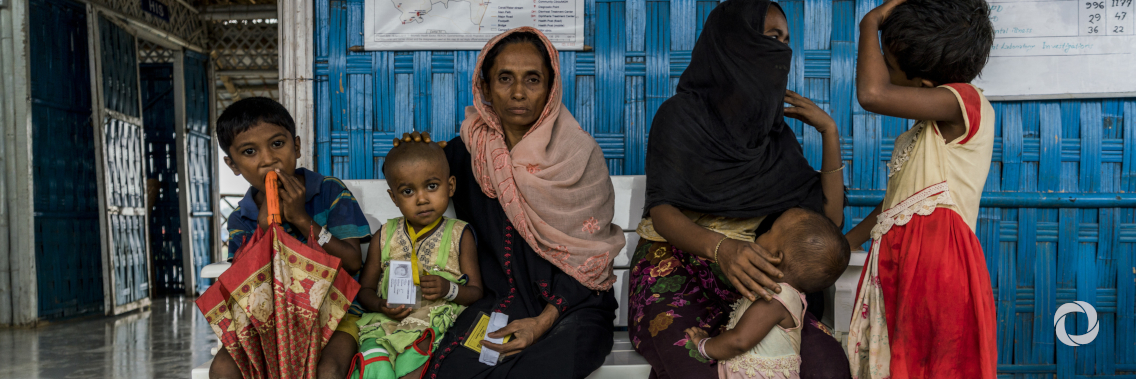
UNHCR and its partners provide round-the-clock emergency health care for Rohingya refugees in south-eastern Bangladesh.
The clinic is one of nine primary health centres supported by UNHCR that are now open 24 hours a day, seven days a week, providing life-saving services to Rohingya refugees. A further 14 health posts provide daytime services and referral to the clinics.
They serve nearly one million Rohingya refugees who live in the vast, pop-up settlements, more than 740,000 of whom fled a government crackdown in Myanmar in 2017 that followed decades of marginalization and abuse for the stateless Muslim minority.
Since the Rohingya refugee crisis began nearly two years ago, UNHCR, its NGO partners and other UN agencies have worked closely with the Bangladesh Ministry of Health and Family Welfare and local authorities to scale up their assistance to provide essential health care to refugees.
UNHCR supported primary health care facilities gave 482,000 consultations to refugees at the settlements in 2018, without charge. The agency and its partners have also trained 309 refugees as volunteer community health workers, who go house-to-house to increase awareness about health and nutrition issues.
“These primary health care centres are the backbone of our health response,” says Oscar Sanchez Pineiro, Senior Field Technical Coordinator with UNHCR in Cox’s Bazar. “And the facilities that operate throughout the night provide a critical service to the refugees here in Kutupalong.
Despite record levels of global displacement and continuing refugee influxes, some 10.5 million refugees worldwide were supported with public health services by UNHCR and partners last year, according to UNHCR’s Annual 2018 Public Health Global Review.
The investment in health care provided by all the humanitarian agencies has an important impact in refugee settlements in southern Bangladesh, where the crude mortality rate – used to determine per capita death rates – decreased by a whopping 70 percent in 2018 from the previous year.
“We have made huge inroads in providing health care to everyone who needs it – literally saving lives and making a difference every day,” says Sandra Harlass, UNHCR’s Senior Public Health Officer.
Original source: UNHCR
Published on 18 July 2019