
Add us as your preferred source on Google to see more of our content in Search.
 Add to Preferred Sources
The EBRD together with its partners is supporting a pioneering energy project in Jordan with a financial package of up to US$ 35 million. The project will enable the telecoms operator Orange Jordan to cover part of its demand with clean energy generated in solar plants.
The investment will be the largest private-to-private solar project in Jordan yet, benefiting from new regulations that allow private consumers to establish their own energy facilities under a process known as “wheeling” that transports electricity from within the grid to facilities outside the grid’s boundaries.
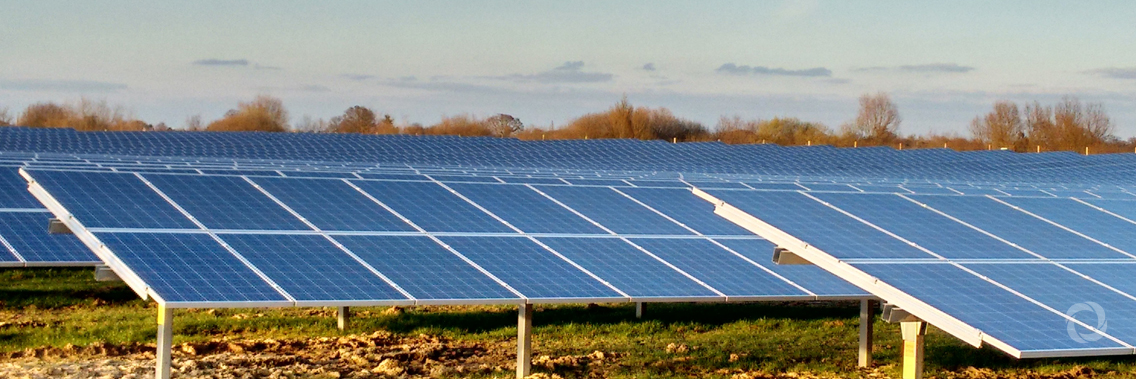
The solar plants have been developed by the Jordanian company Kawar Investment, engineered, procured and constructed by Kawar Energy and are located in the King Hussein Bin Talal Development Area, the Mafraq governorate and the Amman governorate. Their total capacity is 37 MWp. Kawar Energy, which currently holds one of the largest photovoltaic portfolios in the Middle East of more than 200 MW of operational projects, was able to construct the plant exceptionally quickly. The operation and maintenance arm of Kawar Energy will be handling the operations and maintenance of all three solar parks for the next 20 years.
The financing is provided by the EBRD with a loan of up to US$ 15 million, the Jordan Kuwait Bank PSC (JKB) with US$ 9.0 million, the Arab Jordan Investment Bank (Qatar) LLC (AJUBQ) with US$ 6.0 million and the Climate Investment Funds’ Clean Technology Fund with US$ 4.6 million. The project marks the EBRD’s first collaboration of the EBRD with two major Jordanian banks to finance an energy project, demonstrating the attractiveness of renewable energy for commercial financing and highlighting the expertise of Jordanian banks in structuring innovative project finance transactions.
The three plants are expected to generate around 70 GWh per year in total, reducing CO2 emissions by 41,500 tonnes annually. Historically Jordan has relied on hydrocarbon imports to meet its energy needs, but in recent years the country has introduced significant initiatives to develop its potential in renewables such as solar. With support from the EBRD, the local renewable energy sector has increased capacity from around 20 MW to over 1,000 MW between 2012 and 2019, with an estimated 1.2 GW under construction or development.
Original source: EBRD
Published on 31 July 2019