
Add us as your preferred source on Google to see more of our content in Search.
 Add to Preferred Sources
The Asian Development Bank (ADB) has approved a $415 million loan to Georgia to build a new highway as part of a wider government program to improve the country’s transport network and enhance Georgia as a regional trade and tourism hub.
The Kvesheti–Kobi Road Project is the first in a series of upgrades planned for the North–South Corridor, which is a vital transit route for Georgia, Armenia, and regional trading partners. The corridor also intersects with the East–West Highway to the north of Tbilisi, the capital, providing access to the shortest link connecting Central Asia with Europe and East Asia.
The 23-kilometer (km) bypass will be built between the towns of Kvesheti and Kobi and pass through the spectacular Caucasus Mountains in the country’s northeast. It will provide a safer and faster travel alternative for residents, tourists, and freights trucks who face worsening delays on the current road, especially on the Jvari Pass section, which is highly exposed to avalanches in winter.
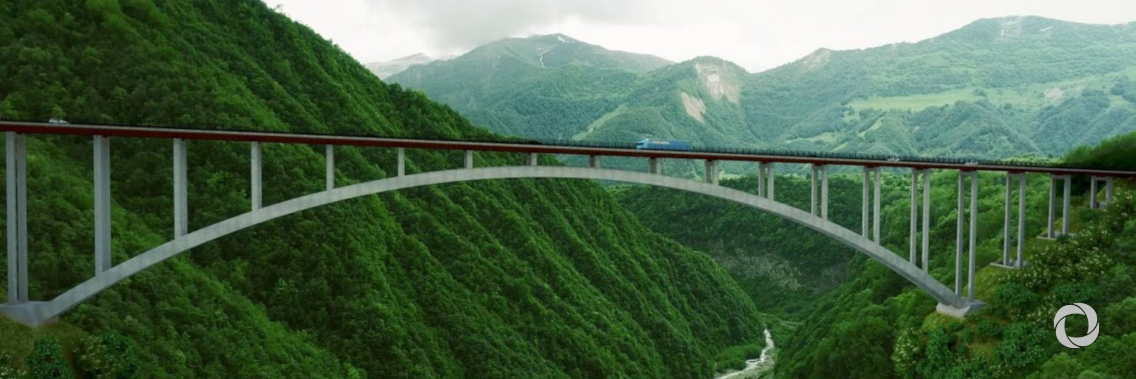
The bypass will follow a new alignment through the Khada Valley and include engineering features such as Georgia’s longest tunnel (9 km) and its most advanced arch bridge spanning the Khadistskali River. The road will also provide a much-needed link to services and job opportunities for the valley’s remote communities.
Currently, the 3,500 vehicles that use the existing 35-km road each day face high accident risks as well as road closures of more than 40 days a year, mostly in winter. With traffic numbers expected to double over the next 10 years, building a shorter, safer, and faster road that is operational all year is a national priority.
“A high-quality road network is essential for the growth and development of Georgia, which is located at the center of transit and trade routes linking Europe and Asia,” said ADB Director General for Central and West Asia Mr. Werner Liepach. “The new bypass road will greatly improve the North–South Corridor and help enhance trade and regional connectivity, as well as increase the number of visitors in the region, which is home to world-class natural and cultural heritage assets.”
The project is estimated to cost $558.6 million, with co-financing of $60 million anticipated from the European Bank for Reconstruction and Development (EBRD) and $83.6 million from the Government of Georgia. The road has been designed to European standards and will be single lane each way plus an additional climbing lane uphill for heavy vehicles. To overcome difficult terrain challenges in the Caucasus Mountains, it will require 5 tunnels at a total length of 11 km and 6 bridges at a total length of 1.6 km.
Road construction is expected to begin in 2020.
Original source: ADB
Published on 01 August 2019