
Add us as your preferred source on Google to see more of our content in Search.
 Add to Preferred Sources
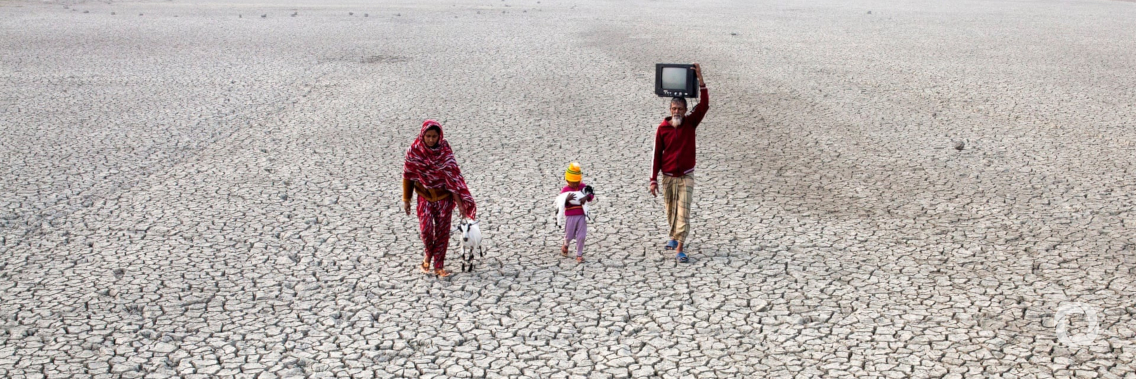
Throughout human history, migration and climate have always been connected, but in the modern era, the impacts of the man-made climate crisis are likely to extensively change the patterns of human settlement.
Dina Ionesco is the head of the Migration, Environment and Climate Change Division at the UN International Organization for Migration (IOM), which has been at the forefront of efforts to study the links between migration, the environment and climate.
As she explained, we are now living in an era where catastrophic climate-related events are linked to human activity, and this is likely to have a major impact on the way that we decide to migrate, and settle.
“The Atlas of Environmental Migration, which gives examples dating as far back as 45,000 years ago, shows that environmental changes and natural disasters have played a role in how the population is distributed on our planet throughout history.”
The climate crisis is already having an effect: according to the Internal Displacement Monitoring Centre, 17.2 million people had to leave their homes last year, because of disasters that negatively affected their lives. Slow changes in the environment, such as ocean acidification, desertification and coastal erosion, are also directly impacting people’s livelihoods and their capacity to survive in their places of origin.
“There are predictions for the twenty-first century indicating that even more people will have to move as a result of these adverse climate impacts. The Intergovernmental Panel on Climate Change (IPCC), the main UN authority on climate science, has repeatedly said that the changes brought on by the climate crisis will influence migration patterns. The World Bank has put forward projections for internal climate migration amounting to 143 million people by 2050 in three regions of the world, if no climate action is taken.”
Responding to the challenges of environmental migration in a way that benefits both countries and communities, including migrants and refugees, is a complex process involving many different actors.
Solutions can range from tweaking migration practices, such as visa regimes, to developing human rights-based protection measures. Most importantly, they involve a coordinated approach from national governments, bringing together experts from different walks of life:
“There is no one single solution to respond to the challenge of environmental migration, but there are many solutions that tackle different aspects of this complex equation. Nothing meaningful can ever be achieved without the strong involvement of civil society actors and the communities themselves who very often know what is best for them and their ways of life.”
Original source: UN News
Published on 31 July 2019