

Add us as your preferred source on Google to see more of our content in Search.
 Add to Preferred Sources
One year since the beginning of the Ebola outbreak in the Democratic Republic of Congo, UN relief chief urged for action to stop the carnage in Syria and 350 million saplings planted all over Ethiopia. Here is what you missed from last week’s headlines in the international development sector:
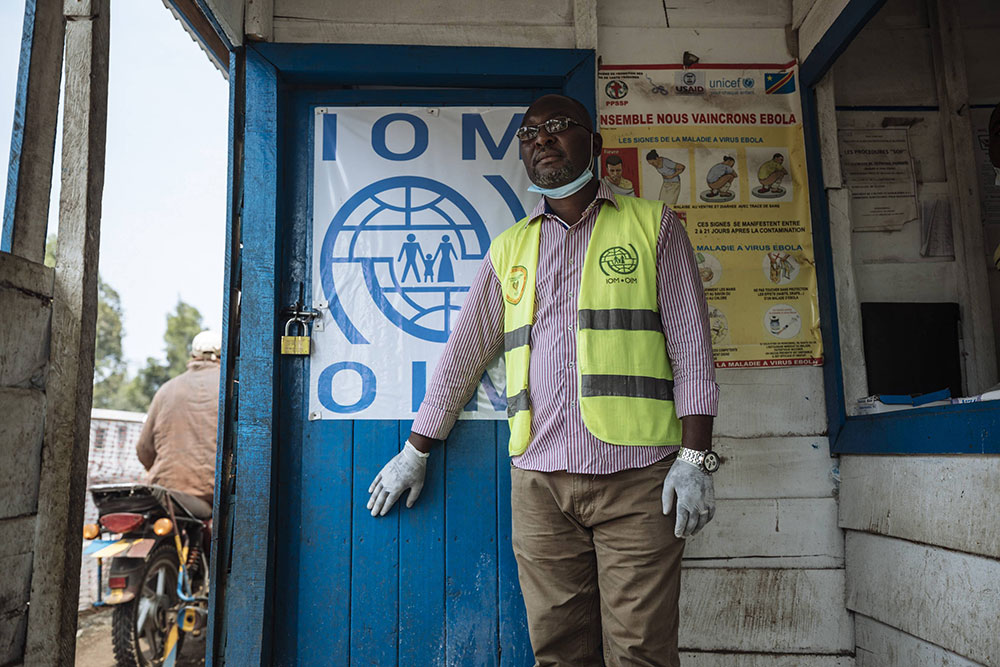
Main story: Ebola in DRC, one year on
1 August marked one year since the Government of the Democratic Republic of Congo (DRC) declared an outbreak of the Ebola virus disease in North Kivu province of the DRC. A joint statement made by WHO, UNICEF, UNOCHA and WFP in regards to the this day said the United Nations and partners were continuing to ramp up the response in support of the Government and to further bolster joint action.
“At this critical juncture, we reaffirm our collective commitment to the people of the DRC; we mourn for those we have lost, and we call for solidarity to end this outbreak.”
According to IOM, the disease continues to affect highly mobile communities along the Ugandan border at major transit hubs, which has accelerated prevention efforts at more than 64 border crossing points in Western Uganda. Meanwhile, the World Health Organization urged that borders should not be closed and no restrictions on trade be made when recently declaring the outbreak in DRC a Public Health Emergency of International Concern.
South Sudan is another country under monitoring since there is an increasingly significant risk of Ebola spreading across porous borders into the country. UNICEF is working with the Government of South Sudan, as well as other UN agencies and partners to disseminate prevention messages and engage communities to help them protect themselves against the disease. However, lack of funding prevents the agencies to ensure they continue to provide assistance. UNICEF South Sudan is one of them, in need of USD 4.3 million to fund EVD prevention and preparedness activities until the end of September 2019.
The Ebola outbreak is occurring in an active conflict zone which makes an effective response far more complicated because of insecurity, including armed attacks on health workers and facilities, and population displacement. In some of the affected areas, violence is preventing the agencies from reaching communities and working with them to stop further transmission.
There have been more than 2,600 cases reported and 1,750 lives claimed since the outbreak. In the last six months, the number of cases has increased dramatically and conflict continues to prevent health workers from getting to those most in need.
UN relief chief urges Security Council action in Syria
Bombing and shelling in Syria for more than 90 days by the Government and Russia have led to “carnage in the so-called de-escalation zone” of Idlib, the UN Emergency Relief Coordinator told the Security Council in his seventh update since the “current onslaught” began.
“We all know exactly what has been happening for the last three months in Idlib. There is no shortage of information,” said Mark Lowcock, the UN Under-Secretary-General for Humanitarian Affairs. “You in this Security Council have ignored all the previous pleas you have heard. You know what is happening and you have done nothing for 90 days as the carnage continues in front of your eyes”. Are you going to…do something about it?”, concluded the UN humanitarian chief.
Many hundreds Syrians have been injured, over 440,000 displaced and dozens of civilians killed or injured by shelling of the Security Council-listed terrorist group Hayat Tahrir al-Sham and the non-State armed groups associated with them in the past three months.
The statement came amid reports of 2018 as the worst year on record for children caught up in armed conflict; the year saw the highest numbers killed or maimed since the United Nations began monitoring the violation.
Here’s what else has happened
Nigeria: Ten years after the start of a violent insurgency in north-east Nigeria, the humanitarian crisis is still far from over, said the United Nations and its aid partners, who have underscored the need to “collectively redouble efforts” to help the most vulnerable. The ongoing humanitarian crisis remains among one of the most severe in the world with 7.1 million people in need of life-saving assistance and 1.8 million people uprooted from their homes – the vast majority of them women and children.
Tree-planting: More than 350 million saplings were planted all over Ethiopia on July 29th, shattering the previous record for the largest number of trees planted in a single day. The government-led campaign called for volunteers and civil servants to plant 4 billion trees in an effort to restore soils and reverse deforestation in Ethiopia, which has lost most of its historical forest cover.
AIDS response: The United Nations Economic and Social Council (ECOSOC) has adopted a resolution that calls on countries to urgently scale up evidence-informed programmes to end the AIDS epidemic as a public health threat by 2030. It says the AIDS epidemic is not yet over and calls for reinvigorated efforts by all stakeholders.
Maternal deaths: Achieving zero women dying from preventable causes related to childbirth within the next decade in 76 high-burden countries has a total price tag of $61 billion in direct health service costs. This includes paying for medical staff, drugs and obstetric supplies, show new preliminary figures compiled by researchers from UNFPA and Johns Hopkins University.
Reports
WHO Report on the Global Tobacco Epidemic
A new WHO report shows many countries are still not adequately implementing policies, including helping people quit tobacco. The seventh WHO Report on the Global Tobacco Epidemic analyses national efforts to implement the most effective measures from the WHO Framework Convention on Tobacco Control (WHO FCTC) that are proven to reduce demand for tobacco. These measures, like the “MPOWER” interventions, have been shown to save lives and reduce costs from averted healthcare expenditure.
The report says that progress is being made, with 2.4 billion people living in countries now providing comprehensive cessation services (2 billion more than in 2007). However, only 23 countries are providing cessation services at the best-practice level. In the same time, 116 more provide fully or partially cost-covered services in some or most health facilities, and another 32 offer services but do not cost-cover them, demonstrating a high level of public demand for support to quit.
Events
6th Urbanization and Poverty Reduction Research Conference
Washington, DC, USA
9 September 2019
The 6th Urbanization and Poverty Reduction Conference will bring together academics and development practitioners to present and discuss questions relating to People, Markets, and Cities. In particular, the conference will focus on effective land, housing, transport and local labor market policy in cities and their implications for economic development and social inclusion.
OECD Global Blockchain Policy Forum 2019
Paris, France
12-13 September 2019
Among others, the second edition of the Blockchain Policy Forum will convene senior decision-makers from the public and private sectors, experts, academics and other stakeholders to assess the development of blockchain over the past 12 months and delve into some of the specific challenges to implementation and adoption, and to discuss emerging policy responses and share best practices identified in public blockchain initiatives across the world.
Sustainable Investment Forum North America 2019
New York, USA
25 September 2019
The fourth annual Sustainable Investment Forum North America will present panels, keynotes and in-depth streamed sessions on key topics including themed investing, climate-aligned investing, responsible banking, asset class overview and ESG integration.
High-level Dialogue on Financing for Development
New York City, US
26 September 2019
The High-level Dialogue will aim to renew the global commitment to financing at the highest political level. It will serve as a UN call for collective action to energize growth and tackle challenges in the global economy, encourage public and private investment to align with the 2030 Agenda, and promote new and innovative initiatives that target gaps in financing sustainable development.
2019 OSCE Mediterranean Conference
Tirana, Albania
24-25 October 2019
The 2019 OSCE Mediterranean Conference is dedicated to the 25th anniversary of the OSCE and its Mediterranean Partners for Co-operation. The theme of the event is “The 25th anniversary of the Mediterranean Contact Group: achievements, challenges and future opportunities for the Partnership”.