
Add us as your preferred source on Google to see more of our content in Search.
 Add to Preferred Sources
Over the past three months, intense hostilities in Idleb province and Hama Governorate in north-western Syria have killed close to 500 civilians and displaced more than 440,000.
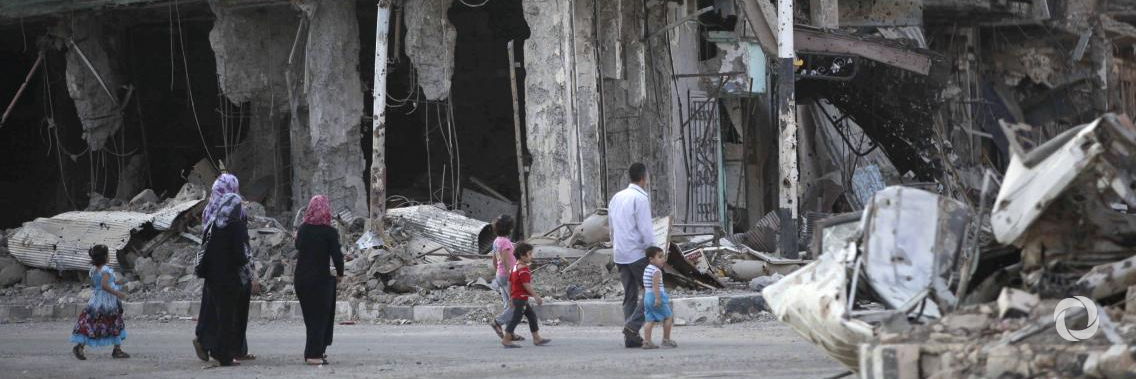
An early August ceasefire was broken after only three days. Looking back, nine years of brutal conflict across Syria have triggered an unprecedented wave of refugee movements and internal displacement. Half of the Syrian population, or nearly 12 million people, have been forced from their homes. Hundreds of thousands of civilians have lost their lives. And the country‘s infrastructure and economy are in tatters.
The war in Syria will be nine years old in March 2020. Although the conflict may be generating fewer headlines nine years on, it remains one of the world‘s most complex humanitarian crises. Here is a snapshot of the Syria conflict in numbers.
3,069 days
The number of days since the start of the crisis in Syria on 15 March 2011. That‘s eight years and five months. In comparison, World War II came to an end in 1945 after 2,194 days.
225
The number of attacks on schools and medical facilities in 2018, the highest number since the conflict began in in 2011. The UN verified 113 attacks on schools last year, a 69 percent increase compared with 2017, as well as 112 attacks on hospitals. In the first six months of 2019, 29 health facilities have been impacted by violence in northwest-Syria, most of them in Idleb Governorate.
3 million
The number of people currently caught in the crossfire in northwest Syria, following an upsurge in violence since the end of April 2019. This is equivalent to the entire population of Armenia.
11.7 million
The estimated number of people in Syria requiring humanitarian and protection assistance in 2019. To this day, humanitarian needs in Syria remain immense.
46%
The percentage of fully functioning public health centres in Syria at the end of 2018. Out of a total of 1,811 assessed centres, 22 percent were partially functioning and 32 percent were out of service. More than eight years of conflict have decimated the country’s health and education system.
5,625,871 refugees
The number of registered Syrian refugees as of 1 July 2019. Of these, Turkey hosts over 3.6 million refugees, followed by Lebanon (930,000), Jordan (660,000), Iraq (250,000), and Egypt (130,000). Out of the total figure, only a small minority – 330,000 people – live in designated refugees camps. The majority live scattered in communities in their host country.
5.9 million internally displaced
The number of protracted internally displaced people inside Syria; the vast majority of them in Aleppo, Idleb and rural Damascus. That is more than half the entire population of Belgium.
2.1 million children
The number of children in Syria who are out of school, with an additonal 1.3 million at risk of dropping out. The upheaval caused by displacement and the limited absorption capacity of hosting communities creates barriers for internally displaced children.
Original source: UNOCHA
Published on 13 August 2019