
Add us as your preferred source on Google to see more of our content in Search.
 Add to Preferred Sources
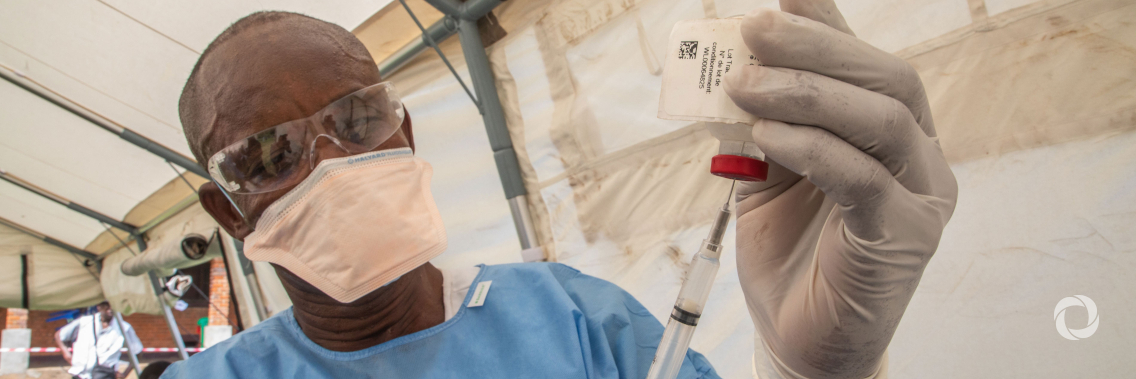
On 13th August, the Ministry of Public Health and AIDS Control kicked off the vaccination campaign for frontline staff against the Ebola virus disease. The campaign started at the Gatumba entry point at the Border with the Democratic Republic of Congo.
The Ebola vaccination campaign is part of Burundi’s preparation for a possible case of Ebola. The campaign will be implemented under the leadership of the Ministry of Public Health and AIDS Control, with the support of the World Health Organization (WHO). Financial support is provided by GAVI, the Vaccine Alliance.
Burundi has received doses of the Ebola vaccine to provide protection against the Zairian strain of the virus, which is currently affecting the Democratic Republic of the Congo (DRC). Although this vaccine is not yet approved and its commercial use is not yet authorized, it has been shown to be effective and safe during Ebola outbreaks in West Africa. Further scientific research is required before the vaccine can be licensed.
The vaccine is used for humanitarian purposes to protect people most at risk of an Ebola outbreak. It will be administered to health and front-line staff working in priority areas where there is a risk of transmission. These are health workers working at points of entry into the country as well as other people potentially exposed to the Ebola virus disease, such as laboratory workers, surveillance teams and people responsible for carrying out dignified and secure burials.
“The vaccination of health and front-line staff is a significant step forward in preparing for the response to this disease,” said Dr. Kazadi Mulombo, WHO Representative in Burundi. “The vaccine proved highly protective against Ebola in a trial conducted in Guinea in 2015. Pending consideration by the relevant regulatory authorities, the WHO Strategic Advisory Group of Experts on Immunization recommended that the rVSV-ZEBOV vaccine be used as part of a protocol on expanded access and compassionate use during Ebola outbreaks related to the Zaire strain, such as the current one in the DRC. In Burundi, we will use it for prevention purposes.”
Vaccination is one of the many preparedness measures that Burundi has planned to put in place. WHO deployed experts to support these activities and trained 50 national immunization workers on behalf of the Ministry of Public Health and AIDS Control.
No cases of Ebola have been reported in Burundi, but preparation remains crucial. WHO, which supports Burundi in preparedness activities, has provided logistical support to ensure the cold chain and facilitated the provision of supplies and equipment necessary to carry out the vaccination campaign.
Original source: WHO
Published on 14 August 2019