
Add us as your preferred source on Google to see more of our content in Search.
 Add to Preferred Sources
No country, regardless of how far or remote from the current Ebola outbreak in the Democratic Republic of the Congo, can be considered 100% free of the risk of importation of a potential Ebola virus disease case. However, WHO’s current assessment finds the overall risk in the European Region to be low. The risk remains very high in the Democratic Republic of the Congo and the WHO African Region.
The current Ebola outbreak in the Democratic Republic of the Congo was declared a public health emergency of international concern (PHEIC) under the International Health Regulations (IHR) (2005) on 17 July 2019.
Upon declaring a PHEIC, the IHR Emergency Committee issues temporary recommendations, adopted by the WHO Director-General. The Committee reconvenes every 3 months to review the PHEIC status and modify, extend or terminate the temporary recommendations.
Some of the areas relevant to the European Region are as follows.
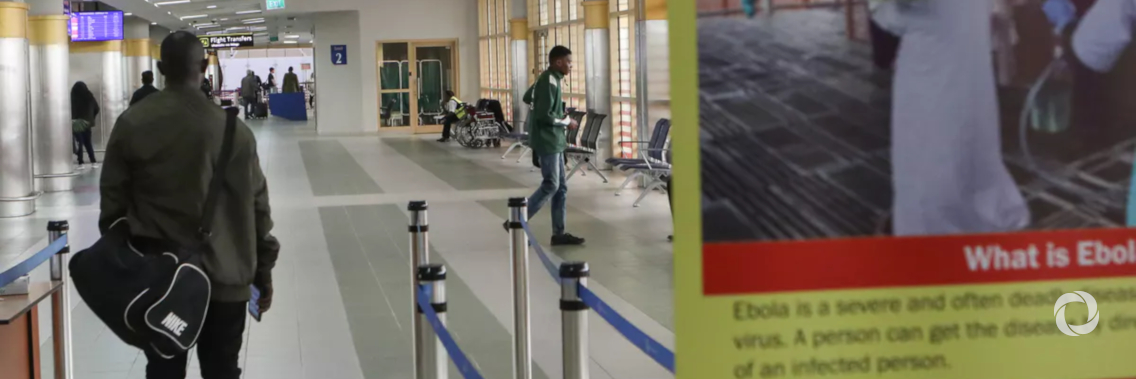
- WHO and the Committee do not recommend entry screening at airports or other ports of entry outside the neighbouring countries of the Democratic Republic of the Congo.
- WHO and the Committee do not recommend exit screening at international airports except in affected countries (currently only the Democratic Republic of the Congo).
- Countries should not close borders or place any restrictions on travel and trade, including general quarantine of travellers arriving from affected countries (currently only the Democratic Republic of the Congo).
- National authorities should work with airlines and other transport and tourism industries to ensure that they do not exceed WHO’s advice on international traffic.
Many countries in the European Region have undertaken additional preparedness actions, and following them diligently is important. Intensified operational readiness and preparedness activities are also ongoing in a number of countries neighbouring the Democratic Republic of the Congo, further decreasing the risk for onward travel of an infected person to Europe. WHO remains ready to provide help and support where requested.
Original source: WHO
Published on 19 August 2019