
Add us as your preferred source on Google to see more of our content in Search.
 Add to Preferred Sources
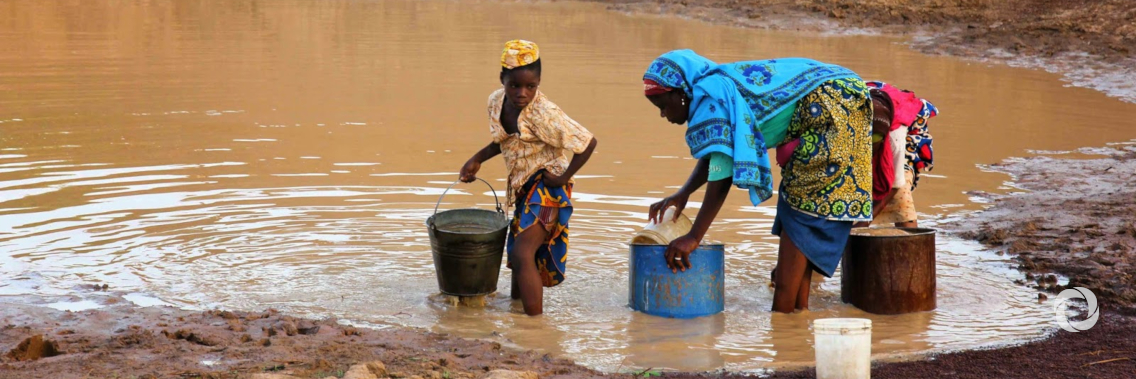
During World Water Week in Stockholm, African Water Ministers and several NGO’s launched a proposal for a ‘Marshall Plan for Water in Africa’ for the next decade, to guarantee all Africans have clean water and safe sanitation in 2030. This will boost Africa’s economy, create jobs, peace and gender equality, and reduce poverty, migration risks, healthcare costs and risks from climate change.
Total investments are 40 billion USD per year, to be financed for 50 percent by African governments and consumers, the other half by donors, banks and private companies, including climate adaptation funds. This Water plan fits in a broader ‘Marshall Plan with Africa’, proposed by German Federal Minister of Economic Development Gerd Müller to create jobs, economic growth and rule of law. The plan will be discussed in 2020 in the EU1. Working together towards substantial change, with funding including donors and banks (loans), boosting a whole continent and therefore contributing on a global scale, are key factors for the ‘Marshall’- approach. The SDG6 WASH Financing Plan for Africa includes “blended financing” (ODA, Government and Commercial/Capital Market Finance).
During an African Focus Session on the 28th of August in Stockholm, organized by the African Union Commission and AMCOW (African Water Ministers), the Marshall Plan for Water was applauded by the global water community.
After the meeting it was proposed that AMCOW and the African Union have to take the lead in drafting the Marshall Plan for Water, and to publish sector finance plans for the next decade by African governments, utilities, and consumers (paying tariffs), capitalizing up to 20 billion USD per year.
The Marshall Plan for Water needs to indicate also how other actors can contribute to finance the other 20 billion USD per year, additional to existing ODA support. Jeroom Remmers of Simavi, a Dutch NGO and CSO focal point for the organization Sanitation and Water for All (SWA), believes that banks and other investors could pay 14 billion USD per year, while donors USA, UK, France and China pay 0,25 billion euro each per year and larger donors like the EU, Japan/S-Korea, Germany and remaining OECD countries could each pay 1 billion euro per year (0,35% of OECD ODA; doubling their existing WASH ODA budgets, partly grants, partly loans). Private funds like the Bill & Melinda Gates Foundation and company funds (WBCSD members) together need to pledge and pay the remaining 2 billion euro per year.
AfDB’s Director Water and Sanitation Ms. Wambui Gichuri explained once again the importance, stating that in nearly all African countries, more than 50 percent of the population do not have access to at least basic water and sanitation services.
Gichuri: “If countries invest in this sector, economies start growing fast. Inadequate water and sanitation services create 780.000 deaths worldwide per year from diarrhea and cholera, more than deaths from flooding, droughts, epidemics, earthquakes and conflicts combined”.
Original source: World Water Week
Published on 29 August 2019