
Add us as your preferred source on Google to see more of our content in Search.
 Add to Preferred Sources
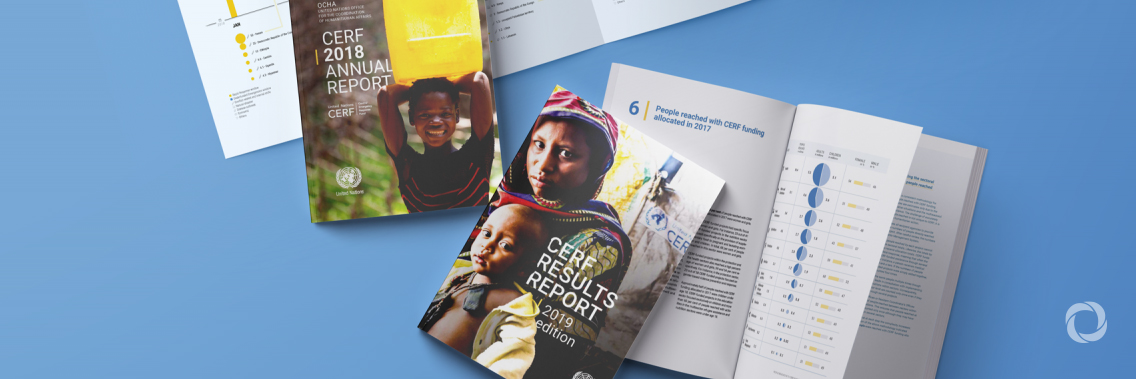
The 2018 Annual Report tells the story of the support provided by CERF in 2018 through life-saving allocations. The year was record-breaking for the Fund – for the first time, CERF disbursed over half a billion dollars to ensure life-saving assistance to millions of crisis-affected people.
Donors also made sure that 2018 was a record-breaking year for contributions to CERF, with total annual funding of US$558.6 million.
CERF allocations supported humanitarian operations in 48 countries and territories across the globe (including 6 countries that benefited from a regional allocation):
CERF made the largest-ever single CERF allocation to date, providing nearly $50 million to fight the growing risk of famine in Yemen amid the collapse in public services:CERF allocated a total of $320.8 million through its Rapid Response window to kick start urgent humanitarian responses following new or deteriorating crises, while $179.7 million was allocated through CERF’s underfunded window to support people caught in severely underfunded emergencies.
The CERF Results Report – 2019 edition, provides an overview of the results achieved through each grant disbursed during 2017. Because the implementation of CERF grants generally takes up to nine months and is followed by a three-month reporting period, CERF funding allocated in 2017 was implemented and reported on until the end of 2018, with the results consolidated and reflected in this report.
The report estimates that the $418.2 million allocated by CERF in 2017 reached a total of 24.6 million people in 36 countries. Needs were quickly met, including for 10.4 million people that received access to health care, 8.1 million people that benefited from water and sanitation interventions and 5.4 million people that received food assistance. The report also highlights that 54 percent of all reached were displaced people beneficiaries were people affected by displacement (including 3.1 million refugees, 5.2 million IDPs and 5 million people hosting displaced populations).
The achievements described in these two reports would not have been possible without the generous donor contributions.
Original source: UNOCHA
Published on 05 September 2019