
"Everything has to change for our planet to stay the same", says UN Secretary-General Antonio Guterres
Add us as your preferred source on Google to see more of our content in Search.
 Add to Preferred Sources
Our planet is changing dramatically. Forests are burning, sea ice is shrinking and the Greenland icecap is pouring unprecedented amounts of water into the ocean. Levels of carbon dioxide in the atmosphere are higher than they have been in human history, climate disruption is the new reality, and scientists are warning that the planet is simply not capable of coping with the growing pressure being placed on it by humanity.
“Since I became Secretary-General, I have witnessed what it means to live in a world that is, on average, one degree Celsius hotter than it was before the industrial revolution. I have come to know the dramatic force of natural disasters supercharged by climate change,” said UN Secretary-General Antonio Guterres.
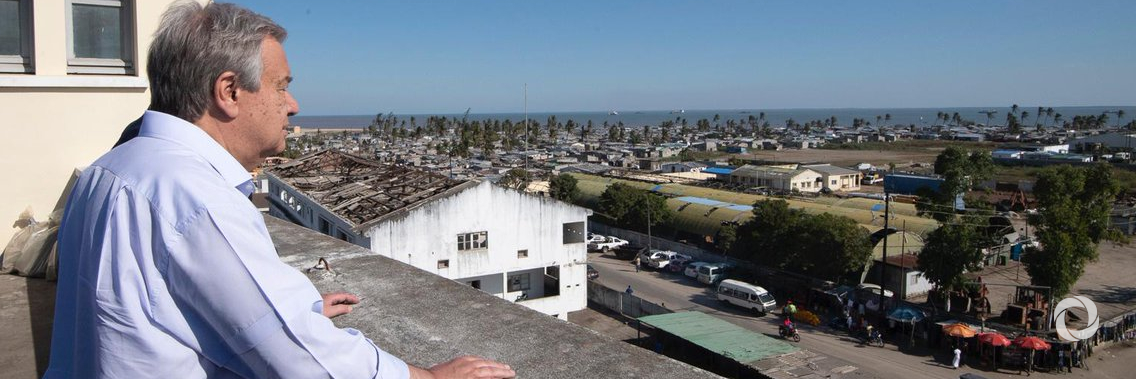
“I have seen families in the tiny Pacific archipelago of Tuvalu watching the sea creep closer and closer to their doorsteps. I have seen my own country, Portugal, mourn the deaths of over 100 people killed by forest fires during one of Europe’s hottest recorded summers. And I have seen children in Mozambique learning their ABCs in the scorching sun after the roof of their school had been swept away by Cyclone Idai, along with 90 percent of their city’s infrastructure. While there, I also visited a safe place for women in a displacement camp, which highlights the double jeopardy women face in times of disaster, where their losses are often compounded by vulnerability to violence,” he added.
The human suffering caused by the global climate emergency is already massive and growing daily, yet science tells us that it is nowhere near as calamitous as what our children will experience if we add another degree of global heating. Science also tells us that we are currently on track to add a further two or more degrees within the lifespan of our grandchildren – a legacy of almost unfathomable ruin, and one we must do everything to avoid.
Despite the daily diet of grim news, there is still hope. According to the Intergovernmental Panel on Climate Change, we can win the race against time that the climate crisis has become. But to do so, we must take transformative action now and implement “rapid, far‑reaching and unprecedented changes in all aspects of society,” around the globe.
“That is why I have been asking for bold announcements from governments and businesses at the Climate Action Summit that I am convening at United Nations Headquarters on 23 September. I am calling on countries to shift taxes from people to pollution, end fossil fuel subsidies and stop building new coal power plants by 2020. These are the first steps we must take to slow down runaway climate change before it breaches the most dangerous thresholds. We need to cut greenhouse emissions by 45 percent by 2030, and we need carbon neutrality by 2050.”
To contain global heating, we will have to overhaul the way our societies and economies function, from energy, transport and industry to how we farm and eat. It will require protecting and restoring our forests and oceans, and delivering clean, affordable energy to everyone. It will also demand gender equality, universal health coverage and quality education for all.
It is here that climate change also presents compelling opportunities. The best plan to solving one of the world’s biggest threats is one we already have: the 2030 Agenda for Sustainable Development, the universally agreed path to the future we want and need. The 2030 Agenda, with its 17 Sustainable Development Goals, recognizes that global challenges such as climate change, poverty, hunger and inequality require a holistic transformation, and is our best tool for ensuring that the dramatic transition we need will be just and fair.
This month, world leaders will gather in New York for a week of critical meetings to accelerate action for sustainable development, including the Climate Action Summit and the SDG Summit.
“I count on leaders everywhere to rise to the challenge of their 2015 promise to deliver a sustainable future for this and future generations,” Mr. Guterres concluded.
Original source: United Nations
Published on 09 September 2019