
Add us as your preferred source on Google to see more of our content in Search.
 Add to Preferred Sources
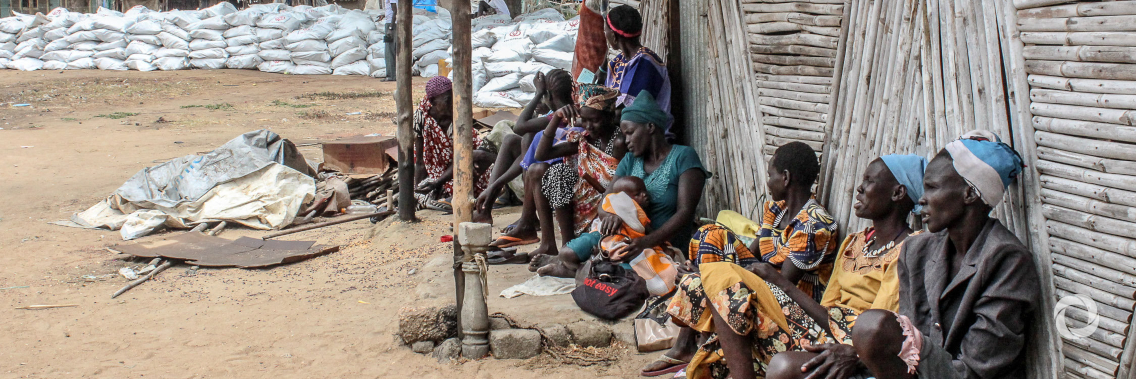
In spite of a slight improvement in the food security situation since June 2019, more than half the population of South Sudan – some 6.35 million people – do not know where their next meal will come from, three United Nations agencies warned.
According to an Integrated Food Security Phase Classification (IPC) update, released jointly by the Government of the Republic of South Sudan, the Food and Agriculture Organization of the United Nations (FAO), the United Nations Children’s Fund (UNICEF) and the World Food Programme (WFP), 54 percent of people in South Sudan are still severely food insecure.
The report estimates that 10 000 people are currently in Catastropheand facing an extreme lack of food, while about 1.7 million are in Emergency and another 4.6 million people are experiencing crisis levels of acute food insecurity.
While the Greater Upper Nile region continues to be the most food insecure, followed by the Greater Bahr el Ghazal region, those in Catastrophe are in Yirol East of the former Lakes state and will need urgent humanitarian support to save their lives.
“With political stability and sustained peace, South Sudan could quickly recover from the crisis and boost its food production. The IPC findings are still alarming, but they also show that the revitalized peace agreement is bearing dividends and its full implementation is of utmost significance for the country,” said Meshack Malo, FAO Representative in South Sudan. “FAO is working with returning farmers to assist them resettle, build their livelihoods and produce their own food”.
Responding to the crisis
FAO is providing starter kits that consist of crop seeds suited to local conditions, agricultural tools, fishing equipment and cash-based interventions with the goal of closing the food gap for some 1 million farming households. Additionally, FAO is carrying out extensive animal vaccination and treatment to support some 7 million livestock keepers, protecting their livelihoods and opening market opportunities.
UNICEF and 40 civil society organizations are providing key nutrition interventions for children and women in South Sudan. Currently, UNICEF is supporting 1 150 outpatient therapeutic programme (OTP) centres and 99 stabilization centres across South Sudan. From January to July 2019, more than 144 000 children affected by severe acute malnutrition were treated with high-quality services, of whom more than 90 percent have successfully recovered.
WFP and partners have responded with food and cash distributions in the worst-affected areas and have so far this year reached some 3.9 million vulnerable people. With enough resources, WFP will provide up to 5.1 million people with a variety of support, including life-saving food and cash distributions in areas with working markets, food in return for work on the construction and rehabilitation of community assets, and food for school meals. Of this, WFP will provide special products for the prevention and treatment of malnutrition to some 1.6 million children and pregnant or breastfeeding women.
Original source: WFP
Published on 11 September 2019