
Add us as your preferred source on Google to see more of our content in Search.
 Add to Preferred Sources
A major conference on drought and desertification has held a special Drought Day to emphasize the need to switch from a piecemeal, reactive crisis-driven approach to a proactive risk management approach.
“Drought is a major obstacle to achieving Sustainable Development Goal 15. We need to move faster in our fight against drought. Let us dust this villain, and mitigate climate change,” said Mr. Ibrahim Thiaw, Executive Secretary of the UN Convention to Combat Desertification (UNCCD) in his opening remarks at the Drought Preparedness Day on 11 September.
The UNCCD secretariat dedicated the tenth day of the Conference of the Parties (COP14) to focus on the success and challenges of the current tools, methodologies and policies that support drought preparedness across the globe.
WMO was one of the co-organizers of the event, alongside UNCCD, the Food and Agriculture Organization of the United Nations (FAO) and the Global Water Partnership (GWP).
Speakers at the Drought Day emphasized the need to shift from a reactive crisis-driven approach to proactive drought risk management policies.
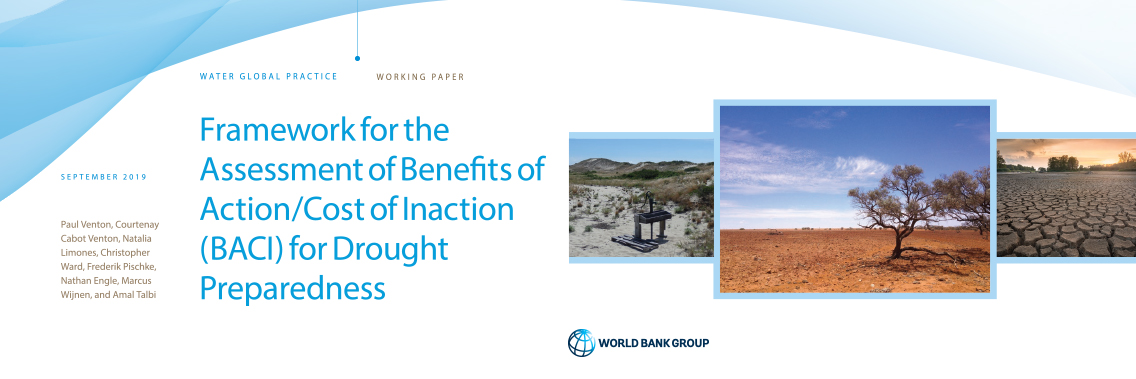
GWP, WMO and the World Bank launched a new working paper: “Framework for the Assessment of Benefits of Action/Cost of Inaction (BACI) for Drought Preparedness.”
The document is a guide to those responsible for drought management to support them in making the economic case for integrated drought risk management. Its main audience is development practitioners, who are engaged with governments and are often the ones advocating for more proactive drought preparedness.
This is a partnership of WMO and GWP with over 30 institutional partners, offers a helpdesk to provide policy and management guidance through globally coordinated generation of scientific information and sharing best practices and knowledge for integrated drought management.
Original source: WMO
Published on 12 September 2019