

Add us as your preferred source on Google to see more of our content in Search.
 Add to Preferred Sources
What is the value of women’s work? Organizers of the January 21 Women’s March on Washington are hoping that this year’s International Women’s Day can answer that question. The organisers have announced a strike on March 8 called “A Day Without a Woman”, which coincides with International Women’s Day. The strike will highlight “the enormous value that women of all backgrounds add to our socio-economic system—while receiving lower wages and experiencing greater inequities, vulnerability to discrimination, sexual harassment, and job insecurity”.
Women are encouraged to take the day off paid and unpaid work to demonstrate the impact women have on the global economy.
The first International Women’s Day in 1909 was in honor of female garment 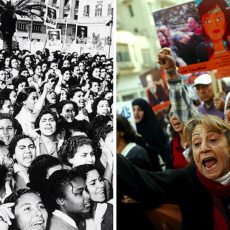 workers who protested against poor working conditions. This year’s strike will bring the day back to its roots. And 108 years later, unequal labor conditions remain a crucial gender issue. Worldwide, women’s average earnings are almost half those of men, with average global earned income at $10,778 for women and $19,873 for men. Women’s paid work is also disproportionately over represented in the informal sector where wages are lower and benefits and protections are lacking. Women continue to face higher risk of unemployment than men at the global level. And they are also more likely to work fewer hours for pay, often against their choice, due to domestic responsibilities: including domestic labor (including fetching water, cooking, cleaning, and caring for dependents), women have far longer working days than men.
 It’s clear that women contribute significantly to the global economy—and yet their work often goes unrecognized. The women’s labor strikes in 1909 made traditionally feminine labor visible. A strike in 2017 should demonstrate that today women’s work affects all sectors. That is why increasing women’s participation and equality in the labor force has such clear gains for development. When women earn a competitive income, they spend 90 percent of it on health, food, and education, meaning that increasing women’s income can contribute to breaking inter generational cycles of poverty. The McKinsey Global Institute suggests that $12 trillion would be added to the global GDP if gender gaps in work and society were narrowed.
Source: Center for Global Development. Read full article.
8 March, 2017