
Add us as your preferred source on Google to see more of our content in Search.
 Add to Preferred Sources
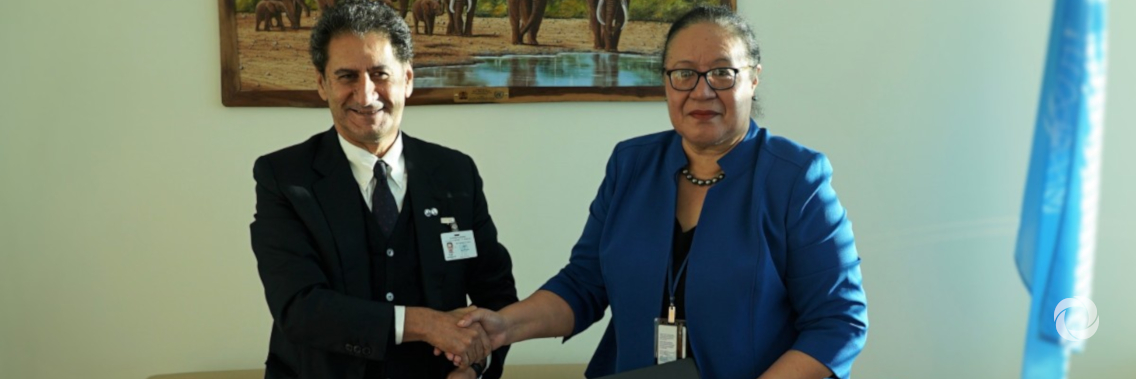
The United Nations Office of the High Representative for the Least Developed Countries, Landlocked Developing Countries and Small Island Developing States (UN-OHRLLS) and the International Renewable Energy Agency (IRENA) have underscored their commitment to strengthen cooperation aimed at advancing renewable energy in the Least Developed Countries (LDCs), Landlocked Developing Countries (LLDCs) and Small Island Developing States (SIDS).
Strengthened collaboration between the two organisations contributes to global efforts to implement the 2030 Agenda for Sustainable Development and Nationally Determined Contributions (NDCs) in the context of renewable energy.
“The energy transformation brings significant opportunity to developed and developing countries alike,” said IRENA Director-General Francesco La Camera. “Renewables are not only our most effective response to rising emissions, but they are also an engine of low-carbon development, supporting energy access, energy security and climate resilience in the world’s most vulnerable countries. This partnership bolsters the efforts of both organisations to achieve SDG7 and the wider sustainable development goals.”
The two organisations will collaborate on activities to support LDCs, LLDCs and SIDS to build renewables-based energy systems, close the energy access gaps experienced by these groups of countries and harness the socio-economic and environmental benefits of renewable energy.
LDCs, LLDCs and SIDS consist of 91 countries with a total population of 1.1 billion. Access to energy in these vulnerable countries remains a major challenge. About half of the people in the world without electricity live in LDCs. In 2016, the proportion of the population in LDCs with access to electricity was 44.8 percent. In LLDCs it was 53.1 percent, and in SIDS it was 76.3 percent.
Ending energy poverty in these groups of vulnerable countries and ensuring that no country or person is left behind is critical to achieving the 2030 Agenda for Sustainable Development and achieving the Sustainable Development Goals.
Original source: IRENA
Published on 27 September 2019