
Add us as your preferred source on Google to see more of our content in Search.
 Add to Preferred Sources
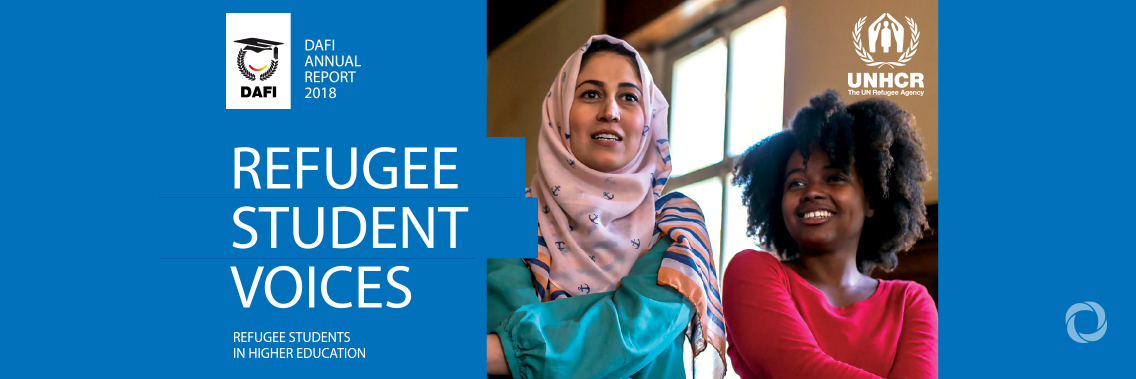
Only three percent of refugees have access to higher education, according to UNHCR, the UN Refugee Agency. In its “Refugee Student Voices: Refugee Students In Higher Education” report, UNHCR is calling for critical support to scale up existing programs and to help secure futures.
“In recent years the level of forced displacement has increased. This represents a serious problem for children who account for half of the world’s refugee population. Without educational opportunities their chances of leading a productive life are severely constrained,” said Ewen Macleod, Director of UNHCR’s Division of Resilience and Solutions.
“Access to higher education can change lives. It creates opportunities for refugees that may not otherwise exist given their experience of conflict and displacement. It helps them shape their own futures, earn a living and to contribute fully to their community.”
While prospects for refugees to attain higher education are limited, substantial progress has been made to expand the current pool of opportunities.
The three percent of refugees enrolled in tertiary education, as of the end of 2018, is a small but impactful increase when compared to the previous year in which only one percent of refugees were enrolled in higher education. This is largely attributable to a greater acceptance on the part of states, education institutions and partner organizations of the importance of tertiary education for refugees.
The Refugee Student Voices report also highlights the growing demand for higher education from refugees around the world, with the number of refugee students enrolled through UNHCR’s higher education scholarship program, DAFI (Albert Einstein German Academic Refugee Initiative), at a record level since its inception almost three decades ago.
Last year 6,866 young refugees enrolled in higher education in 51 countries through the program which represents the highest annual number of DAFI scholarships awarded.
The regional distribution of scholarships reflect global displacement trends. In 2018 DAFI scholarship recipients came from 39 countries with Syrian refugee students representing the largest cohort (36 per cent), followed by refugee students from Afghanistan (14 per cent), South Sudan (12 per cent), Somalia (10 per cent), the Democratic Republic of Congo (5 per cent) and Sudan (4 per cent).
The top five refugee host countries of study for DAFI students were Turkey (12 percent), Ethiopia (12 percent), Jordan (11 percent), Uganda (7 percent) and Kenya (6 percent), also reflective of global refugee movements.
The DAFI refugee scholarship program was launched in 1992 by UNHCR and the German government and has supported more than 15,500 young refugees with tertiary scholarships in 51 countries.
Aiming to support national education systems, the program prioritizes refugee enrolment in public higher education institutions, which account for 73 percent of all DAFI student enrolments.
With the number of DAFI scholarships offered to refugees constrained by resource limitations, UNHCR is calling for more States to step forward and support the program.
This year, UNHCR aims to increase the number of scholarships to help more than 8,000 refugees access higher education. It has also expanded the program to include Mexico, Afghanistan and Somalia, in response to new displacement and return situations.
UNHCR is also calling for more support to enable refugee inclusion in quality national education systems in refugee host countries.
Rallying support for education, including at the tertiary level, will be a key objective of the forthcoming Global Refugee Forum, which takes place in December 2019 and is a critical opportunity to strengthen the world’s collective response to refugee situations.
Read and download the report: “Refugee Student Voices: Refugee Students In Higher Education”.
Original source: UNHCR
Published on 03 October 2019