
Add us as your preferred source on Google to see more of our content in Search.
 Add to Preferred Sources
A global network of maritime technology cooperation centres has completed an impressive array of pilot projects over the past three years, helping to drive forward the changes which are required to reduce GHG emissions from shipping.
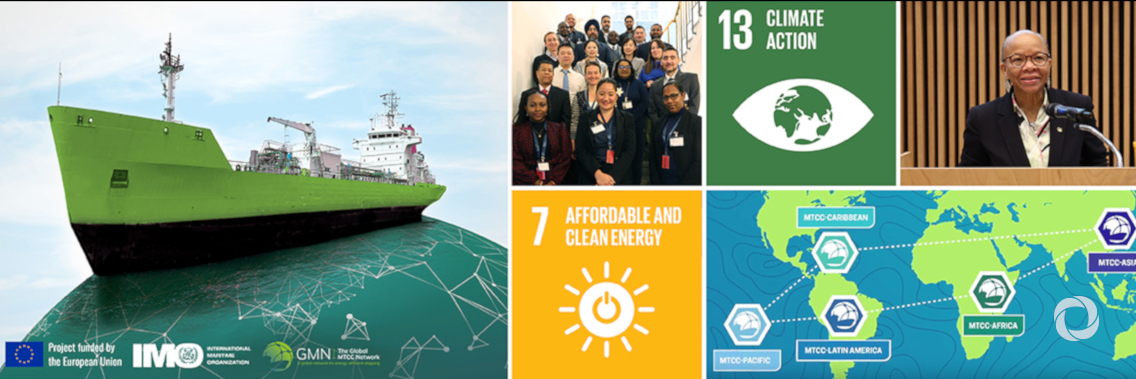
Five regional Maritime Technology Cooperation Centres (MTCCs) have been established under the Global Maritime Technology Cooperation Centres (GMN) Project, which is funded by the European Union and implemented by the International Maritime Organization (IMO), the United Nations specialized agency with a remit to develop and adopt standards for safer, greener and more sustainable shipping.
Between them, the MTCCs count 97 participating countries and have been working with 1,179 participating vessels to deliver sets of data which can help inform and support energy efficiency improvement. Port energy audits and retrofitting of domestic vessels for better energy efficiency are just two ways in which results are already being seen.
More than 160 people from 64 countries recently met for the third annual GMN conference.
During the conference, representatives from the five MTCCs reported on their pilot projects which assess a range of measures to help cut emissions in the maritime sector. These range from data collection in accordance with IMO MARPOL requirements, to assessing the impact of local improvements in ports, to reducing emissions in port areas.
“There is no silver bullet to decarbonise shipping – a basket of measures is needed ranging from framework conditions, standards and innovation to funding and economic incentives,” said Ms. Petra Doubkova, Policy Officer of DG MOVE, European Commission.
As well as pilot projects, each MTCC is involved in hosting and arranging regional and national workshops and seminars, to raise awareness of IMO’s energy efficiency measures for ships and to deliver capacity building through training.
“Climate change is a global challenge, and it is only if we work together and share our knowledge and technologies on energy efficiency and renewable energy production, that we can be successful in mitigating climate change,” said Dr. Cleopatra Doumbia-Henry, WMU President.
IMO has adopted its own initial IMO strategy on reduction of GHG emissions from ships, which envisages a reduction of CO2 emissions per unit of transport work, the so-called carbon intensity, as an average across international shipping, of at least 40% by 2030 – and, at the same time, pursuing efforts towards a 70% reduction by 2050, compared to 2008. It also envisages a reduction of total annual GHG emissions of at least 50% by 2050 compared to 2008, aiming to phase them out as soon as possible. The role of MTCCs is specifically captured in the IMO Initial Strategy.
“If international shipping is to achieve at least 50% reduction by 2050, what this really means is an average 85% emissions reduction per ship,” said Edmund Hughes, Head, Air Pollution and Energy Efficiency, IMO.
Four years on, and thanks to a €10 million funding contribution from the European Union , the GMN project has come into fruition and five MTCCs have been established and have, to date, involved more than 2,210 participants in more than 50 maritime energy efficiency workshops, as well as delivering on pilot projects.
Original source: IMO
Published on 17 October 2019