
Add us as your preferred source on Google to see more of our content in Search.
 Add to Preferred Sources
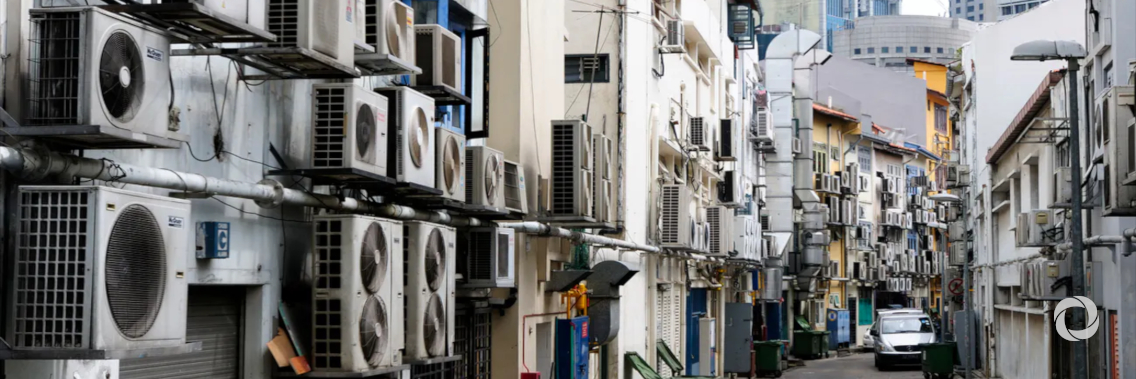
Growing demand for air conditioning units and refrigerators is threatening to accelerate global warming, but new guidelines could help reduce emissions by setting clear performance standards for new appliances.
The new model guidelines for room air conditioners and refrigerators provide a tool for developing and emerging economies on laws and policies requiring new appliances to be energy-efficient and use refrigerants with a lower global warming potential.
If ambitious efforts in line with the guidelines are pursued throughout Africa alone, the annual impacts by 2030 would result in savings of 40 terawatt hours of electricity—equivalent to the output of almost 20 large power plants and a cost of US$3.5 billion in electricity bills—and a reduction of 28 million tonnes of CO2 emissions.
“We need to expand access to cooling, which is essential to many aspects of human life and the achievement of the Sustainable Development Goals,” said Brian Holuj of the UN Environment Programme’s United for Efficiency initiative (U4E), and one of the lead authors of the guidelines. “But we need also need to mitigate the energy and environmental impacts. The guidelines advise governments on how to do just that.”
Cooling is critical for human health, productivity, manufacturing, data centres and research. But the anticipated growth will accelerate climate change unless we change our approach.
Typical cooling units require electricity and a refrigerant gas to operate. When electricity comes from fossil fuel power plants—which is the case for nearly 75 percent of the electricity in non-OECD countries—they emit greenhouse gases and air pollution.
Globally, an estimated 3.6 billion cooling appliances are in use today, and this is projected to increase to 9.5 billion appliances by 2050. If cooling is provided for all who need it in a warming world—and not just those who can currently afford it—this would require up to 14 billion cooling appliances by 2050.
Minimum energy performance standards and energy labels, if well-designed and implemented, are some of the fastest and most effective approaches to improve efficiency.
The problem is that while dozens of countries have minimum energy performance standards and energy labels, many are outdated or unenforced. Inadequate standards and labels leave countries vulnerable as dumping grounds for products that cannot be sold elsewhere.
Aside from the energy profile, many refrigerants have a global warming potential that is well over 1,000 times as potent as carbon dioxide. Under the Kigali Amendment to the Montreal Protocol, countries will phase down hydrofluorocarbon refrigerants—one type of such climate-warming gases—by over 80 percent over the next 30 years. The climate benefits are significantly enhanced by improving energy efficiency while phasing down hydrofluorocarbons. According to the latest research, moving to best available cooling technologies would reduce cumulative emissions by 38–60 gigatonnes of CO2 equivalent by 2030 and 130-260 gigatonnes of CO2 equivalent by 2050.
Original source: UN Environment
Published on 31 October 2019