
Add us as your preferred source on Google to see more of our content in Search.
 Add to Preferred Sources
A High Mountain Summit has issued a Call for Action in the face of the rapid melting of the Earth’s frozen peaks and the consequences for food, water, and human security, as well as for ecosystems, the environment and economies.
The three-day summit, convened by the World Meteorological Organization and a wide range of partners, identified priority actions to support more sustainable development, disaster risk reduction and climate change adaptation both in high-mountain areas and downstream.
“The high mountain regions are the home of the cryosphere and source of global freshwater that are transmitted by rivers to much of the world. Preservation of ecosystem function and services from these regions is essential to global water, food and energy security. Climate change and development are creating an unprecedented crisis in our high mountain earth system that threatens the sustainability of the planet. There is great urgency to take global action now to build capacity, invest in infrastructure and make mountain and downstream communities safer and more sustainable. This action must be informed by science, local knowledge and based on transdisciplinary approaches to integrated observations and predictions,” says the Call for Action.
“We, the participants at the WMO High Mountain Summit 2019, hereby commit to the goal that people who live in mountains and downstream should have open access to hydrological, cryospheric, meteorological, and climate information services to help them adapt to and manage the threats imposed by escalating climate change,” says the Call to Action.
It commits itself to a new Integrated High Mountain Observation and Prediction Initiative as one of the tools to address the challenges of climate change, melting snow and ice and water-related hazards and stress.
It urges that sustainable mountain development and mountain ecosystem conservation should be an integral part of international development policy, and that there should be strengthened transboundary cooperation in open data sharing, forecasting and prediction, policy development and knowledge generation and sharing.
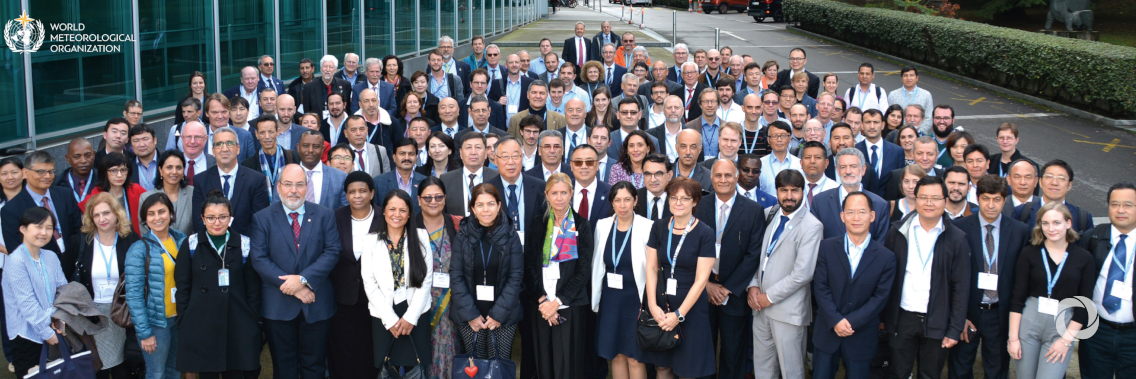
The summit brought together more than 150 participants, representing meteorology, hydrology, environmental and atmospheric sciences, development agencies, research and academia, voluntary partnerships and community representatives.
The Call for Action is entitled: “Avoiding the Impending Crisis in Mountain Weather, Climate, Snow, Ice and Water: Pathways to a Sustainable Global Future.”
The summit noted “the scarcity of meteorological, hydrological, climate, and cryosphere observations in mountain regions, and the difficulties in accessing existing data. But it also stressed the potential of space-based observing systems to improve the situation.
It also highlights the need for early warning and risk prediction systems that reach the people as well as decision-makers in mountain areas so they are able to plan more resilient communities and take early action in the anticipation of hazardous weather, climate and water events.
Original source: WMO
Published on 31 October 2019