
Add us as your preferred source on Google to see more of our content in Search.
 Add to Preferred Sources
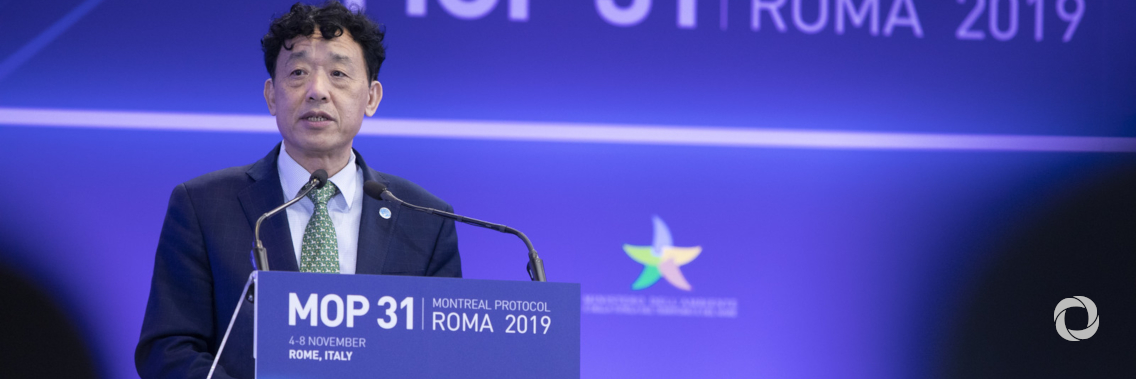
FAO Director-General Qu Dongyu said that international co-operation and innovative, climate-friendly technologies were critical to address global food loss and waste which totals more than 1.3 billion tonnes a year.
The Director-General was addressing the High-Level Segment of the 31st Meeting of the Parties to the Montreal Protocol on Substances that Deplete the Ozone Layer, held at FAO headquarters in Rome.
“The Montreal Protocol is not only a successful environmental agreement that has helped the recovery of the ozone layer and contributed to the fight against climate change,” the FAO Director-General said. “It is also of great importance in protecting the food chain.”
Qu noted that the Protocol is an excellent example of successful multilateral cooperation, driving collaboration between various international, regional and local actors from across governments, businesses, scientists and civil society.
Around one-third of all food produced for food consumption around the world is either lost or wasted. Food loss mainly occurs in developing countries where 821 million people still suffer from chronic malnutrition and also has an impact on climate change.
“Food loss and waste contribute to climate change by generating nearly 8 percent of annual global greenhouse gas emissions,” Qu said. “This is not only harmful to the environment but also to farmers’ incomes.”
FAO is working with a broad spectrum of stakeholders and partners to tackle food loss and waste and at this event provided the opportunity for participants to explore sustainable solutions and better protect the earth’s ozone layer in line with the Montreal Protocol and its Kigali Amendment.
The Director-General said plastic pollution partially generated by agricultural activity was another big challenge facing the world today.
“More attention is needed to address the use of plastics in the agricultural value chain, especially in food packaging and the food cold chain,” Qu said. “We intend to collaborate with all partners in addressing plastics pollution in the agriculture and food sectors.” Qu said new technologies and innovative approaches based on a new business model were required.
Reducing and managing the use of the ozone-damaging gas, methyl bromide (MeBr) has been among the initiatives adopted by FAO in support of the Montreal Protocol.
Original source: FAO
Published on 07 November 2019