
Done right, internet use among children can increase learning opportunities and build digital skills
Add us as your preferred source on Google to see more of our content in Search.
 Add to Preferred Sources
Blanket restrictions on children’s internet use prevent them from taking advantage of critical learning and skills development opportunities, according to a new UNICEF report, launched at the Internet Governance Forum in Berlin.
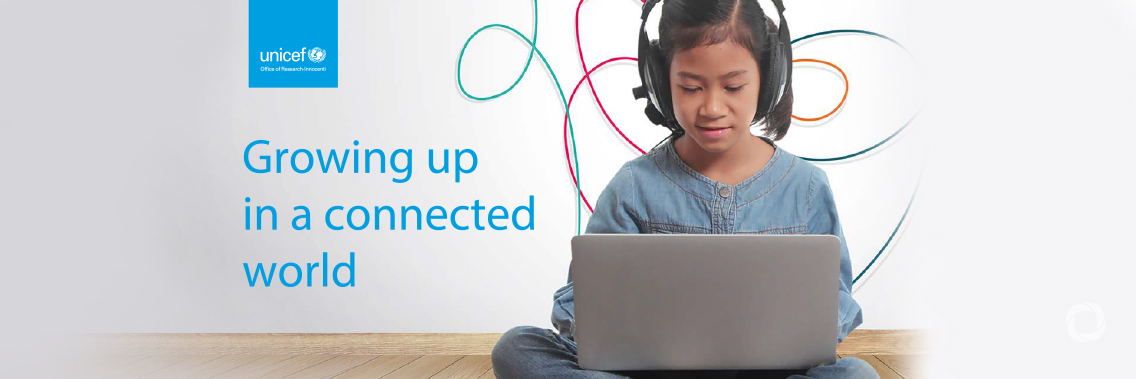
Produced by the UNICEF Office of Research – Innocenti and the London School of Economics and Political Science (LSE), and based on research by Global Kids Online, Growing up in a Connected World compares data on internet use among nearly 15,000 internet-using children in 11 countries across Europe, Africa, Southeast Asia and Latin America. It finds that the activities children engage in online – even those typically seen as entertainment – are crucial for building digital skills.
“We often hear so much about the risks associated with children using the internet, but less about how we can build their online resilience and digital skills,” said Priscilla Idele, Director, a.i, of UNICEF’s Office of Research-Innocenti. “We should help children navigate how to use the internet in the same way we help teach children how to cross the road. We can’t – and don’t want to – prevent children from crossing the road just because it presents dangers; our role is to teach them how to cross the road safely and responsibly in all situations, and to apply safeguards that enable them to do so.”
The report finds that children who participate in a wider range of online activities are more skilled in using the internet, while those whose access to the internet is more limited tend to have weaker digital skills. Online entertainment, for example, like playing video games and watching video clips, can help young children develop an interest in educational, informative and social online experiences. Encouraging children to extend their online activities beyond entertainment alone can also enable them to develop a range of technical and critical capacities, according to the report.
However, internet use is not without risks for children, the report notes:
- More than half the children and young people surveyed in South Africa said that they were exposed to sexual content online.
- 22 percent of those surveyed in Italy and Uruguay say they were exposed to content on self-harm.
- 35 percent of children surveyed in Italy and Uruguay said they were exposed to hate speech.
- Only 2 out of 5 Facebook users aged 10-14 in Bulgaria keep their accounts public.
- Across the 11 countries surveyed, between 30 percent and 75 percent of children say that they may be unable to verify the truth of online information.
To help minimize children’s exposure to the risks of the digital world and maximize their exposure to its benefits, addressing problematic online content or encounters is critical. UNICEF urges tech companies to do more to actively monitor and remove content that is harmful for younger children, and to provide tools that can help parents and educators support children to make the most out of online opportunities.
Parents play a key role, including by talking to children about what they do online or doing activities together, according to the findings of the report. Support from parents enables children to engage in a wider range of online activities, improves their skills, and reduces their exposure to risk, the report says.
Schools should also offer opportunities for teachers to guide children on how to use the internet to search for information and evaluate the truthfulness of what they find, the report notes, stressing that teachers need to be empowered and trained to provide this guidance as part of their classroom practice.
As children increasingly access the internet on their own mobile devices and in their own homes, a balanced approach to children’s online participation is needed to maximize the benefits while keeping children safe, the report says.
Read and download the report: Growing up in a Connected World.
Original source: UNICEF
Published on 28 November 2019