
Add us as your preferred source on Google to see more of our content in Search.
 Add to Preferred Sources
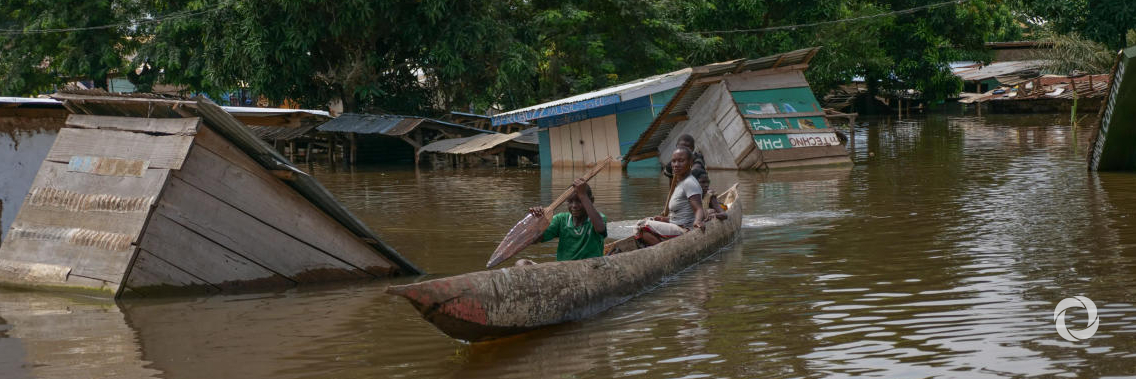
The Central African Republic (CAR) continues to face an unprecedented complex emergency aggravated by the impact of climatic conditions. About 100,000 people have been uprooted from their homes following torrential rainfall and floods in October.
Floods have caused extensive damage to infrastructures and livelihoods. More than 10,000 houses have been destroyed, and wells and latrines flooded. In Ouham Prefecture, about 6,700 hectares of farms are flooded. According to the Integrated Phase Classification (IPC), some 1.9 million people in CAR – or 40 percent of the population – are facing acute food insecurity and require emergency assistance. The impact of the floods is exacerbating the already dire humanitarian situation.
Most of the people displaced by floods have sought refuge in sites for internally displaced persons (IDP) and are receiving coordinated humanitarian assistance. The findings of rapid assessments reveal the following priority needs: shelter, food, health care, non-food items, education, water and sanitation services.
The United Nations Humanitarian Air Service (UNHAS) organized reconnaissance flights that hovered over hard-to-reach areas, enabling humanitarians to assess damage caused by floods.
The floods have increased needs and the vulnerability of the people affected, in addition to jeopardizing their coping mechanisms and resilience. The Delacours site is hosting about 1,500 people.
In a country where 2.9 million people – nearly two-thirds of the population – need humanitarian assistance and protection, the floods have increased needs. Continuous assistance is required to consolidate gains achieved.
The 2019 Humanitarian Response Plan for CAR is seeking US$430.7 million to assist 1.7 million people and is 67 percent funded so far.
Original source: UNOCHA
Published on 04 December 2019