
Add us as your preferred source on Google to see more of our content in Search.
 Add to Preferred Sources
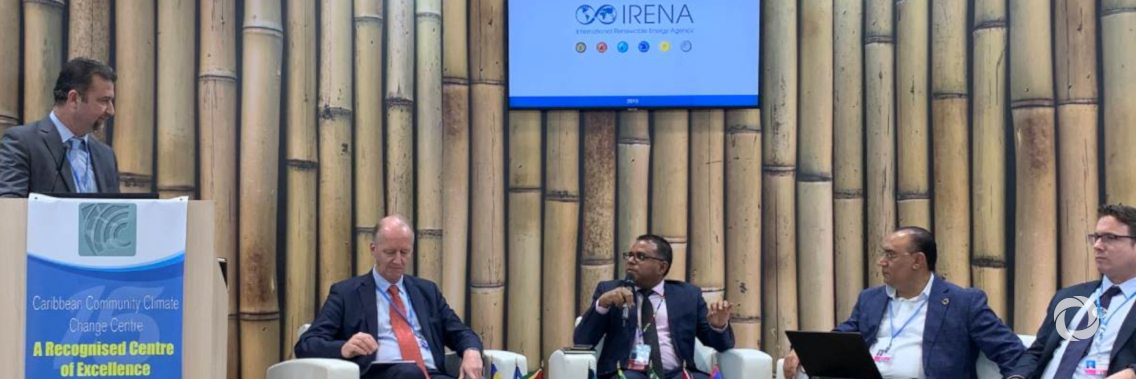
Small Island Developing States (SIDS) are amongst the most vulnerable countries in the world when it comes to climate change. At the same time, they are amongst the most ambitious when it comes to climate action. The progress of the energy transition in SIDS was the focus of several events for IRENA during COP25 where delegates gathered to discuss facilitation of planning and financing of renewable energy projects in SIDS.
IRENA launched the SIDS Lighthouses Initiative in 2014 to support efforts in scaling up the renewable energy transition in small islands countries. Through this initiative, IRENA provides platforms to support: the development of policy frameworks; the identification of potential renewable energy resources; project facilitation; capacity building; and helping island countries find financial and project development support.
According to opening remarks by IRENA’s Director for Knowledge, Policy and Finance Rabia Ferroukhi, the energy targets for 2020 were reached already in 2017, three years ahead of schedule. Following extensive consultations, a new target was set for 5 GW of new capacity by 2023, forming the basis of a new SIDS climate package announced in September 2019 at the UN Secretary General’s Climate Action Summit.
Ferroukhi said: “The energy transition cannot be viewed in isolation from the broader socio-economic structures it is built upon and upon which its long-term sustainability depends. Profound systemic changes are required to ensure a fair and just transition, one that leaves no one behind.”
Christian Lohberger, CEO of Astra Solar and advisor to Papua New Guinea noted that PNG was the first country to submit an NDC after Paris calling for 100% renewable energy by 2050. But while the country has a lot of natural resources, it does not have the necessary policies in place to achieve its targets. He reiterated the importance of having a strong policy and regulatory frameworks to attract investment. Omar Ramírez Tejada, Environmental Advisor to the President of the Dominican Republic, echoed these comments and also emphasized the importance of political stability – peace, in other words – for attracting investment.
Discussions with SIDS continued in the afternoon, looking at synergies between renewable energy, adaptation and mitigation measures. Understanding the connections between climate mitigation, adaptation and development objectives is crucial for SIDS. In practice, this means sharing knowledge and expanding cooperation between policy-makers, the private sector and other stakeholders in the fields of energy, agriculture, development, water, health, and other relevant sectors.
Original source: IRENA
Published on 10 December 2019