
Add us as your preferred source on Google to see more of our content in Search.
 Add to Preferred Sources
The United Nations World Food Programme (WFP) and the Government of Myanmar have renewed their strategic partnership through the signing of a Letter of Understanding.
Under the partnership, WFP and the Government will further boost collaboration for the implementation of WFP’s current five-year Country Strategic Plan (CSP) providing one million conflict-affected people per year in Kachin, Rakhine, Shan and other states and regions with food and nutrition assistance. Resilience-building and emergency preparedness and response activities, at national and state/regional levels, continue to remain a priority.
“The signing of this agreement reflects the strong commitment of the Government towards working hand-in-hand with WFP to tackle hunger and malnutrition in Myanmar, with a view to achieving Zero Hunger,” said Stephen Anderson, WFP Country Director.
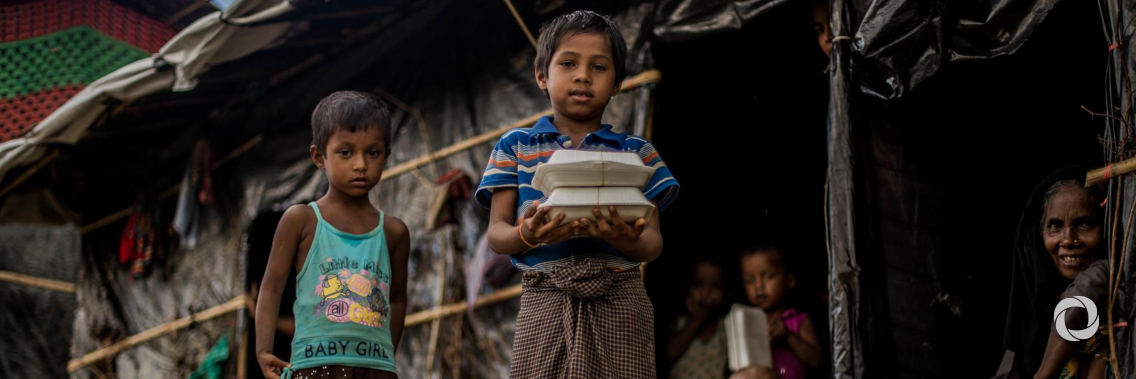
Funded entirely on voluntary donations, WFP in Myanmar is currently delivering emergency food distributions to 240,000 conflict-affected and highly food-insecure people in Rakhine State, 45,000 displaced people in Kachin State, and 14,000 in Shan State. Since November 2019, the assistance has also been extended to over 600 people in Paletwa Township, Chin State, who are affected by the ongoing conflict. Nearly 300,000 children in 11 out of 14 states and regions are receiving high energy biscuits or hot school meals with WFP’s support.
WFP is also reaching vulnerable communities in southeastern Myanmar, the Dry Zone and remote areas of Myanmar including Naga Self-Administered Zone and “Wa” Self-Administered Division. Our work also includes community asset creation, prevention and management of acute and chronic malnutrition, and nutrition support for people living with HIV and tuberculosis. In Myanmar, WFP continues to shift away from direct food assistance to capacity strengthening of national, state and regional institutions to offer appropriate hunger solutions to vulnerable communities.
Original source: WFP
Published on 24 December 2019