
Add us as your preferred source on Google to see more of our content in Search.
 Add to Preferred Sources
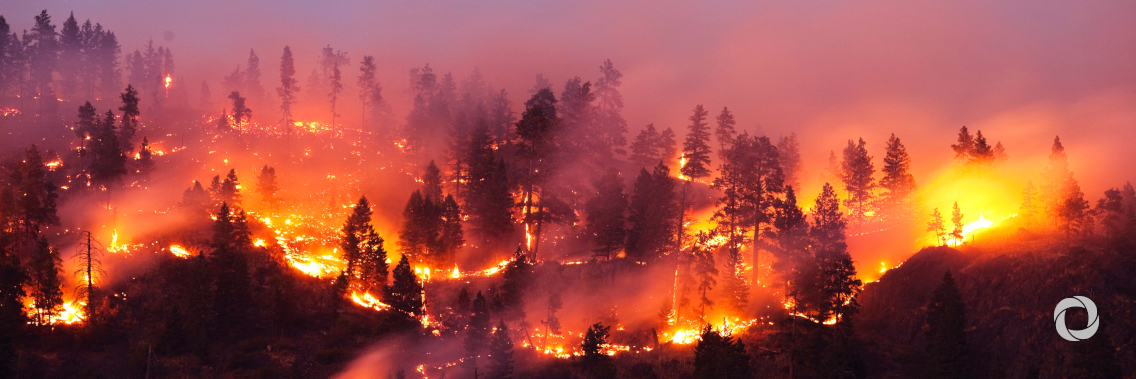
The ongoing bushfires in Australia have focused media attention on wildfires more generally and their link to biodiversity and habitat loss, as well as global heating.
UNEP took a look at some of the different types of wildfires, assessed their impact and what has caused them, and why accurate, real-time data is so important for wise action to curb them.
Different types of wildfires
Did you know that wildfires occur naturally or can be started deliberately or by accident by humans? In some parts of the world, such as Indonesia and Brazil, forest fires have been started deliberately to make way for oil palm and soy bean plantations, or pasture for cattle—all in the name of alleviating poverty, creating economic wealth, and jobs or, mistakenly, food security.
Forest fires on peatlands are particularly worrisome in terms of global heating—they release far more CO2 into the atmosphere than other forest fires and are extremely difficult to detect and extinguish. Some of the largest peatlands are in Malaysia and Indonesia. The occurrence of fires is low under undisturbed conditions, but rapid land-use changes—deforestation and peatland conversion or drainage—are leading to increased frequency of wildfires and peatland fires. This is especially the case on the island of Borneo (73 percent of which is part of Indonesia).
On many days during the 2015 fires in Indonesia, the daily emission rates from the fires exceeded that of fossil fuel emissions in the United States. They caused an international outcry to which the UN Environment Programme (UNEP) and partners responded by establishing the Global Peatlands Initiative.
Crop fires are usually started deliberately. They exacerbate air pollution and have damaging health consequences.
In Africa, wildfires on savannah grasslands are generally a natural phenomenon and can be beneficial for ecosystems. Elsewhere when vegetation catches fire, the danger is that it may spread to forests or human settlements.
In Africa, fires are also used as a land-clearing tool to expand agricultural areas. Burning improves the palatability of young pasture for grazing animals. For farmers, fires eliminate parasites from crops, and are a cheap alternative to insecticides and herbicides. However, along with the release of large quantities of (CO2) into the atmosphere, grass and shrub fires have considerable impacts on soils and vegetation. The loss of vegetation cover facilitates water runoff and wind erosion and reduces water infiltration.
We need to better understand the different drivers of wildfires and be able to prioritize which wildfires cause the most environmental damage.
“The trick is to marshal the relevant data to make it useful to governments and that’s where platforms like the UN Environment Programme’s (UNEP’s) World Environment Situation Room can help,” says Pascal Peduzzi, Director of UNEP’s Global Resource Information Database in Geneva.
The World Environment Situation Room is a work in progress, though data on biodiversity, pollution, disaster risk and climate change is already available. The plan is to have the full database up and running for launch at the next United Nations Environment Assembly at the end of next year.
Original source: UN Environment
Published on 03 January 2019