
Add us as your preferred source on Google to see more of our content in Search.
 Add to Preferred Sources
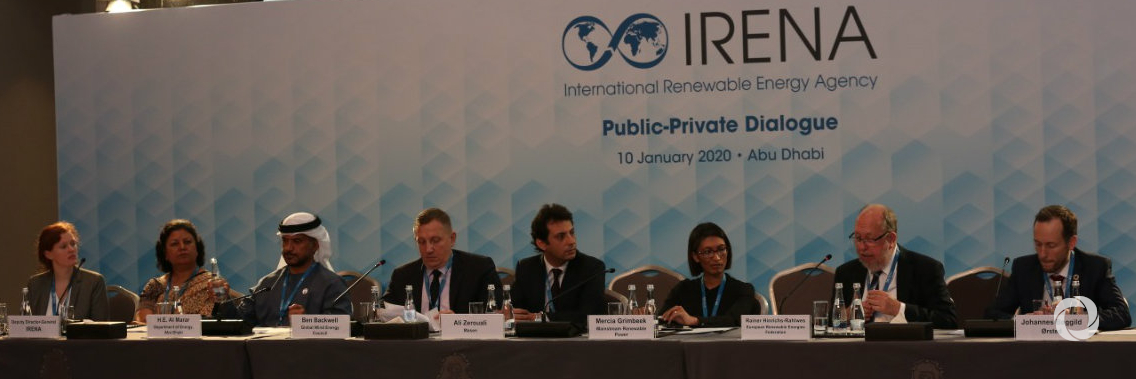
Current energy systems are falling short of supporting the transition to a renewables-based system, participants of the third Public-Private Dialogue, organised by IRENA’s Coalition for Action, agreed.
The policymakers, legislators, private sector and civil society representatives present, called for greater system flexibility, more active participation of market actors, and a redesign of today’s power system set up to accommodate higher shares of renewables.
“We should be seeing explosive renewable energy growth, yet this is not the case everywhere in the world. Creating encouraging market designs will be key,” emphasised Ben Backwell, CEO of the Global Wind Energy Council and co-Chair of the Coalition’s ‘Business and Investors Group’.
This sentiment set the tone for discussions focused on how to achieve a 100% renewables-based power system.
Over the past decade, many countries have witnessed tremendous advancements in renewables according to the latest findings of the Coalition for Action in its white paper on utilities in transition to 100% renewables.
Scaling-up investment is critical to advancing renewable energy, particularly in regions with high renewable energy potential, such as Africa. Participants of the dialogue demonstrated significant interest in investing in Africa, however, the presence of real and perceived risks limits the flow of bankable renewable energy projects — both small and large.
While each country presents unique investment landscapes, a number of common solutions were identified to manage and mitigate risk including the creation of long-term and stable policy frameworks; improving market design (with a focus on de-risking investments) and adopting renewable-focused integrated planning strategies.
Participants also agreed that early involvement of local communities, continued collaboration among all stakeholders, and inclusive decision-making processes are key to ensuring that renewable energy projects lead to an inclusive development. In this context, Francesco La Camera, Director-General of IRENA highlighted the importance of platforms for public-private exchange and knowledge sharing.
“The Public-Private Dialogue has become an important platform for IRENA to engage a variety of stakeholders in the discussion on how we can better work together to scale up deployment of renewables and maximise socio-economic benefits,” he stated.
Throughout the meeting participants expressed concern that renewable energy targets in general, and in Nationally Determined Contributions (NDCs) in particular, fall short of what is needed to achieve global climate objectives, especially in wealthy and high-carbon emitting nations.
Original source: IRENA
Published on 21 January 2019