
Add us as your preferred source on Google to see more of our content in Search.
 Add to Preferred Sources
The Government of India, the Government of Maharashtra and the World Bank signed a loan agreement of $210 million to support smallholder farmers participate in competitive agriculture value chains, facilitate agri-business investments, increase market access and productivity in focus commodities, and build resilience of crops to recurrent floods or droughts in the Indian state of Maharashtra.
The $210 million Maharashtra Agribusiness and Rural Transformation Project, will help build capacity of the nodal departments and institutions; increase private sector investments in agricultural value chains; remove constraints for producers and entrepreneurs in accessing emerging domestic and export markets; build the capacity of the state to respond to commodity-price fluctuations by providing access to timely information on markets and production trends; and enhance adoption of climate-resilient production techniques in the state.
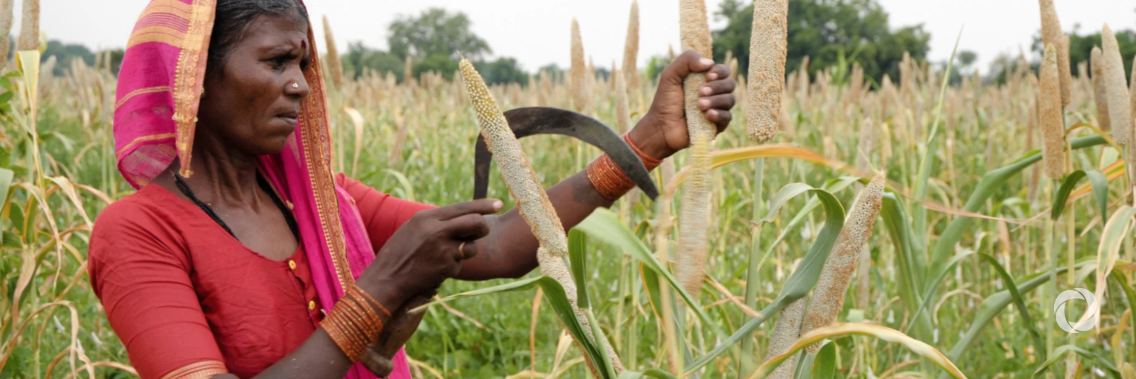
The project will be implemented in all 36 districts of Maharashtra. Over one million farming households will directly benefit from the project. At least 43 percent of farmers and farm-workers participating in project activities are expected to be women. Specific focus will be given to women-led enterprises and the participation of women in the decision-making processes of farmer producer organizations.
“The Government of Maharashtra aims to double agriculture exports from the state and transform the sector into a stable source of sustainable growth and economic development,” said Junaid Ahmad, World Bank Country Director in India. “This project will serve as the nucleus to fulfill the state’s much larger vision of an agriculture-based rural transformation.”
Such an agricultural transformation is already underway in Maharashtra with an upsurge in the production of high-value crops such as fruits and vegetables, pulses, and maize and soybean for animal feed. The state has emerged as one of the country’s largest producer and exporter of fruits, vegetables, pulses, cotton, and soybean. Whereas the area under cultivation for cereals such as rice and wheat has been declining since 2000.
Many of these changes have led to several positive developments for Maharashtra where production is labour intensive (example, in horticulture and floriculture), is climate-resilient (pulse-based cropping systems increases resilience, e.g. pigeon pea intercropping leads to higher soil carbon sequestration than monocrop system) and responds to domestic and global market needs.
The focus of the project on enhancing the capacity of the state to effectively manage and deliver agricultural technical support and services, increasing credit linkages to formal financing institutions, improving Sanitary and Phytosanitary (SPS) standards and investing in business development services will help smallholder farmers become more competitive and increase their links to organized domestic and export markets.
Original source: World Bank
Published on 24 January 2019