
Add us as your preferred source on Google to see more of our content in Search.
 Add to Preferred Sources
The Ebola virus disease outbreak in the Democratic Republic of the Congo (DRC) remains an international public health concern, experts meeting in Geneva concluded.
The World Health Organization (WHO) convened its Emergency Committee which reaffirmed that the risk remains high at the national and regional levels, but low globally.
“It was the unanimous view of the Committee that this event still constitutes a public health emergency of international concern (PHEIC)”, the UN agency said in a statement.
The outbreak in the eastern DRC began in August 2018. As of this month, there have been 3,308 confirmed cases and more than 2,250 deaths.
It is occurring in a region plagued by insecurity, which has affected response efforts, and while the DRC battles serious ongoing outbreaks of measles, cholera and other diseases.
“The country continues to need support to combat infectious diseases as well as to strengthen its health system. Further, there remains an urgent need to maintain international solidarity for the response”, the statement said.
While noting an “encouraging trend” in Ebola case incidence and geographic spread, the health experts said sustaining progress will depend on the security situation, among other factors.
The Committee advised the Congolese authorities to sustain commitment and coordination on Ebola response and to strengthen community awareness and engagement.
Other recommendations include continued cross-border screening and monitoring at checkpoints around hotspots in the east, as well as scaling up preparedness in non-affected provinces.
Ebola virus disease is a rare but severe, often fatal, illness in humans.
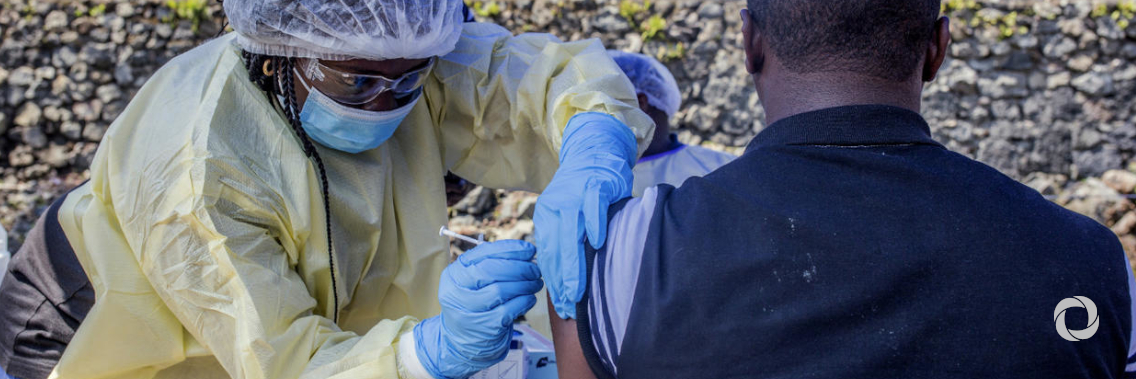
An experimental vaccine, which proved highly protective during a 2015 trial in Guinea, is being used in the DRC outbreak.
Original source: UN News
Published on 12 February 2020