
Add us as your preferred source on Google to see more of our content in Search.
 Add to Preferred Sources
For the past three years, persistent violence and damaged roads had made Mingala town in Basse-Kotto, a district in the Central African Republic (CAR) inaccessible for aid workers. The affected people of the town had not received humanitarian assistance for a long time and felt abandoned.
That changed in November 2019, when a team of humanitarian workers arrived to assess the condition of the 400 internally displaced persons (IDPs) and their host families in the town. The team had chartered a helicopter to asses flood-affected areas and decided to seize the opportunity to evaluate the needs of people in hard-to-reach areas.
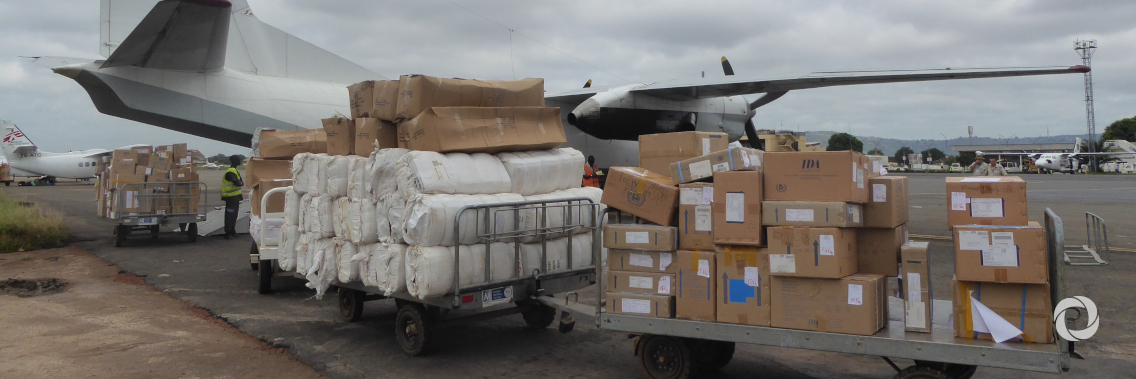
The team not only identified what people most wanted but brought supplies of essential household items, education supplies and dignity kits for girls and women.
Hindered by insecurity and poor roads, the humanitarian community has been slowly trying to gain access to the affected people in CAR.
The upsurge of violence often results in the suspension of humanitarian activities, seriously affecting aid delivery to people in dire need of emergency assistance.
Besides the insecurity, CAR is a landlocked country with poor roads that become particularly inaccessible during the rainy season between May and October. With a surface area of 622,980 square kilometers – about the size of France, only 2.5 per cent of the road network in CAR is paved.
As a result of these constraints, the humanitarian community relies on the United Nations Humanitarian Air Service (UNHAS) and organized reconnaissance helicopter flights. During the torrential rainfall and floods in October 2019, humanitarian workers flew to the affected areas to conduct assessments and deliver life-saving assistance.
“The helicopter enabled the humanitarian community to provide emergency assistance to people in regions which are otherwise inaccessible due to poor road infrastructure”, said Mr. Gian Carlo Cirri, World Food Programme Country Director in CAR. “We are determined to reach men, women and children in need of help wherever they are located countrywide, and we will not relent until this objective is attained.”
For this reason, the chartered helicopter initially scheduled to operate for a month from October 2019 was extended for an extra month – until 15 January 2020.
CAR remains one of the most dangerous countries for humanitarian workers. According to the 2020 CAR Humanitarian Response Plan (HRP), 2.6 million people, almost two-thirds of the population, are in need of humanitarian assistance and protection, half of whom are children. The humanitarian community is requesting US$ 401 million to assist 1.6 million of them with severe needs.
Original source: UNOCHA
Published on 18 February 2020