
Germany contributes EUR 50 million to strengthen resilience in eastern Democratic Republic of the Congo
Add us as your preferred source on Google to see more of our content in Search.
 Add to Preferred Sources
The German Federal Ministry for Economic Cooperation and Development (BMZ), through the German Development Bank KfW, has contributed EUR 50 million ($54 million) to a resilience-building programme to be implemented by the Food and Agriculture Organization of the United Nations (FAO), the United Nations Children’s Fund (UNICEF) and the United Nations World Food Programme (WFP) in the east of the Democratic Republic of the Congo (DRC).
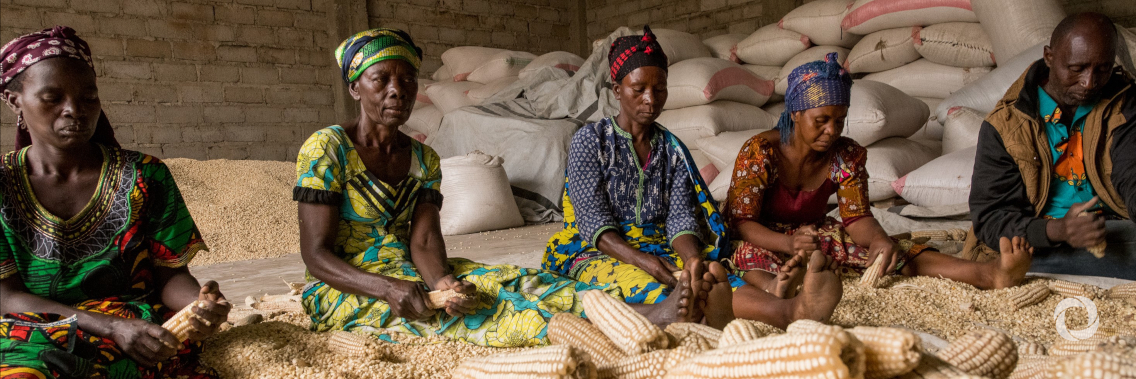
The four-year programme (2020 – 2023) aims to bring relief to over 180,000 people living in rural areas – most of them smallholder farmers – in Walikale territory in North Kivu and Mwenga and Walungu territories in South Kivu.
The farmers will receive assistance to strengthen their agricultural production and post-harvest management, diversify their income-generating activities, and improve nutrition and basic social services. This, in turn, will contribute to peace and stability in the region.
DRC is one of the most fertile countries on earth and has great agricultural potential with approximately 80 million hectares of arable land – the second-largest cultivable area in the world after Brazil. It is also home to approximately half of the continent’s water resources. Yet, its potential remains largely unexploited and it remains one of the poorest countries in the world.
In North and South Kivu, the socio-economic fabric has been destroyed by decades of conflict, displacement and recurring agricultural and climate shocks. Local warlords often take advantage of adolescents’ vulnerability and low levels of education to enroll them in armed groups.
“Building resilience is fundamental to strengthening nutrition-sensitive agriculture, social cohesion and access to basic social services for vulnerable populations. Without food security, there can be no peace. The integrated approach of the FAO-UNICEF-WFP project will help boost vulnerable communities’ food security and nutrition,” said Aristide Ongone Obame, FAO Representative in the DRC.
The Government of Germany has been supporting resilience-building activities in the Kivus since 2017 with a contribution of EUR 35 million through a joint FAO-WFP programme due to wind up in 2020. The new programme will build on the successes of this programme, which has reached more than 400,000 people.
WFP, as the largest humanitarian agency fighting hunger worldwide, brings to the project its vast experience in supporting commodity aggregation, post-harvest handling and storage, marketing and nutrition. FAO helps protect and restore people’s agriculture-based livelihood by supporting community farmer organizations in food production and processing, seed protection, as well as social cohesion. UNICEF brings its experience in addressing severe acute malnutrition and water, sanitation and hygiene (WASH) and by promoting education for peacebuilding at all levels, with a focus on women and children.
Original source: FAO
Published on 04 March 2020