
Add us as your preferred source on Google to see more of our content in Search.
 Add to Preferred Sources
The United Nations is stepping up efforts to address climate-related security risks amid growing recognition of the role of climate change in exacerbating the risk of conflicts.
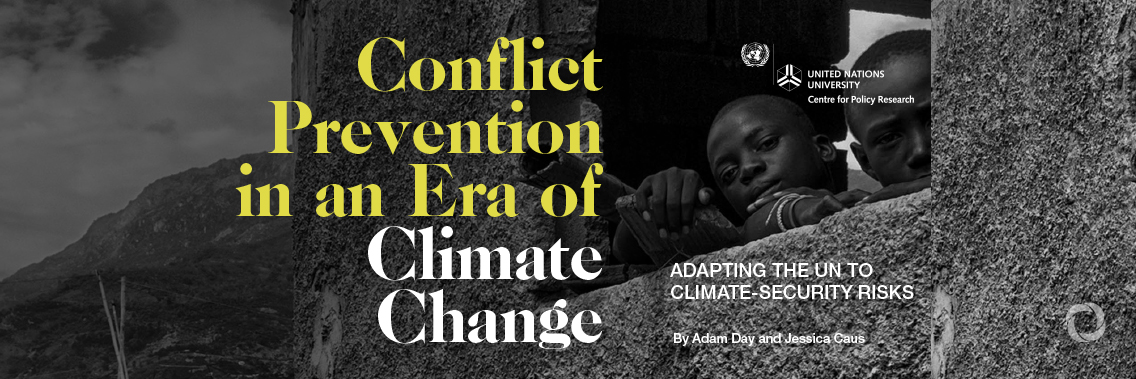
A new report by the United Nations University (UNU) Centre for Policy Research aims to support both the UN and its partners in developing climate-sensitive approaches to preventing conflict.
Climate-related changes in water resources, food security, sea-level rise and flood risks and migration patterns are already impacting the stability of many states to cope.
With warnings of impending “climate wars,” driven by a dramatic shortfall in key resources as the world overheats, UN Secretary-General António Guterres has explicitly placed climate change as a central aspect of the UN’s prevention agenda, as have key member states.
The United Nations has introduced a set of measures recently to make the organization better positioned to prevent conflict. They include improved planning and coordination with other actors, as well as the creation of a Climate-Security Mechanism spanning three UN entities, with a small but dedicated set of capacities to help improve the analysis of, and response to, climate-related security risks in the UN system.
The new UNU Centre for Policy Research report offers:
- A literature review covering the major scholarship on the links between climate change and violent conflict;
- In-depth case studies on climate-security dynamics in Bangladesh and Nigeria;
- Cross-cutting conclusions and recommendations for the UN system.
The main recommendations of the new report include building up foresight capacities, analyzing direct impacts, adopting cross-border responses and prioritizing climate security in the broader climate discussion.
Read and download the report: Conflict Prevention in an Era of Climate Change.
Original source: UNFCCC
Published on 02 April 2020