
Add us as your preferred source on Google to see more of our content in Search.
 Add to Preferred Sources
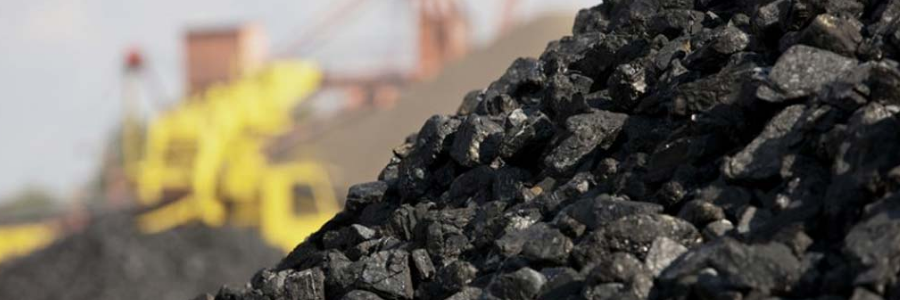
A plan by the Kenyan Ministry of Energy and Petroleum to build a coal-powered electricity plant in Lamu along the Indian Ocean coast has been criticised for replacing wind and geothermal alternatives.
The Lamu Coal Plant will be funded through a public-private partnership agreement comprising a US$1.5 billion loan from several Chinese banks along with a locally raised loan of US$500 million.
Hindpal Singh Jabbal, former energy sector regulatory head and expert witness, told Development Finance that investing US$2 billion in a coal-powered plant in Lamu makes no economic sense as there is “no demand” for the project, and that the plant itself would use only 15 percent of its capacity.

Hindpal Singh Jabbal is the former chairman of Kenya’s Energy Regulatory Commission (ERC) and a fellow of the Economic Development Institute of the World Bank
“This project has been planned without any feasibility studies. It does not make economic sense to invest in this project because the peak power demands should not go beyond five percent for a single power plant,” Jabaal said.
The plant will provide electricity to the Lamu Port, South Sudan and the Ethiopia transport corridor, which is currently under construction. Once completed, it could be the biggest independent power producer in Kenya, controlling 32 percent of Kenya’s energy generating capacity, according to Centrum, one of its investing firms.
Amu Power, a joint venture company with Gulf Energy, a petroleum company and Centrum won the bid to operate the Lamu Coal Plant in 2014. The Industrial and Commercial Bank of China and the Standard Chartered Bank of South Africa, which it owns, have meanwhile committed US$1.2 billion and US$300 million respectively to finance the plant.
Jabbal added: “There is excellent renewable energy to meet the demand for electricity unless the national demand grows at 15 percent by 2030.”
Other recent electricity projects in Kenya include the Last-Mile electricity connectivity project, which Kenya’s president Uhuru Kenyatta implemented with the support of the World Bank and the African Development Bank in 2015. The project aims to connect 2.6 million people to electricity and was backed by US$415 million in funding from development financiers.
For this project, the World Bank provided US$148 million, while France’s Agence Française de Développement (AFD) and the European Union jointly provided US$118 million.
Jabbal also stated that the coal plant would also attract capacity charges of US$360 million each year, which would be paid by consumers of electricity and taxpayers despite the fact that the plant is likely not to be used to full capacity.
Original source: DevFin.
Posted on 24 August 2017.