
Add us as your preferred source on Google to see more of our content in Search.
 Add to Preferred Sources
On Sunday, April 12th, the World Health Organization was close to declaring an end to the latest Ebola outbreak in Congo. However, the two-year battle already fought against the deadly virus now continues with new cases re-emerging just days before the decision to issue this declaration was made. The country’s failed response to the Ebola epidemic could be a lesson for any epidemic eradication, including COVID-19.
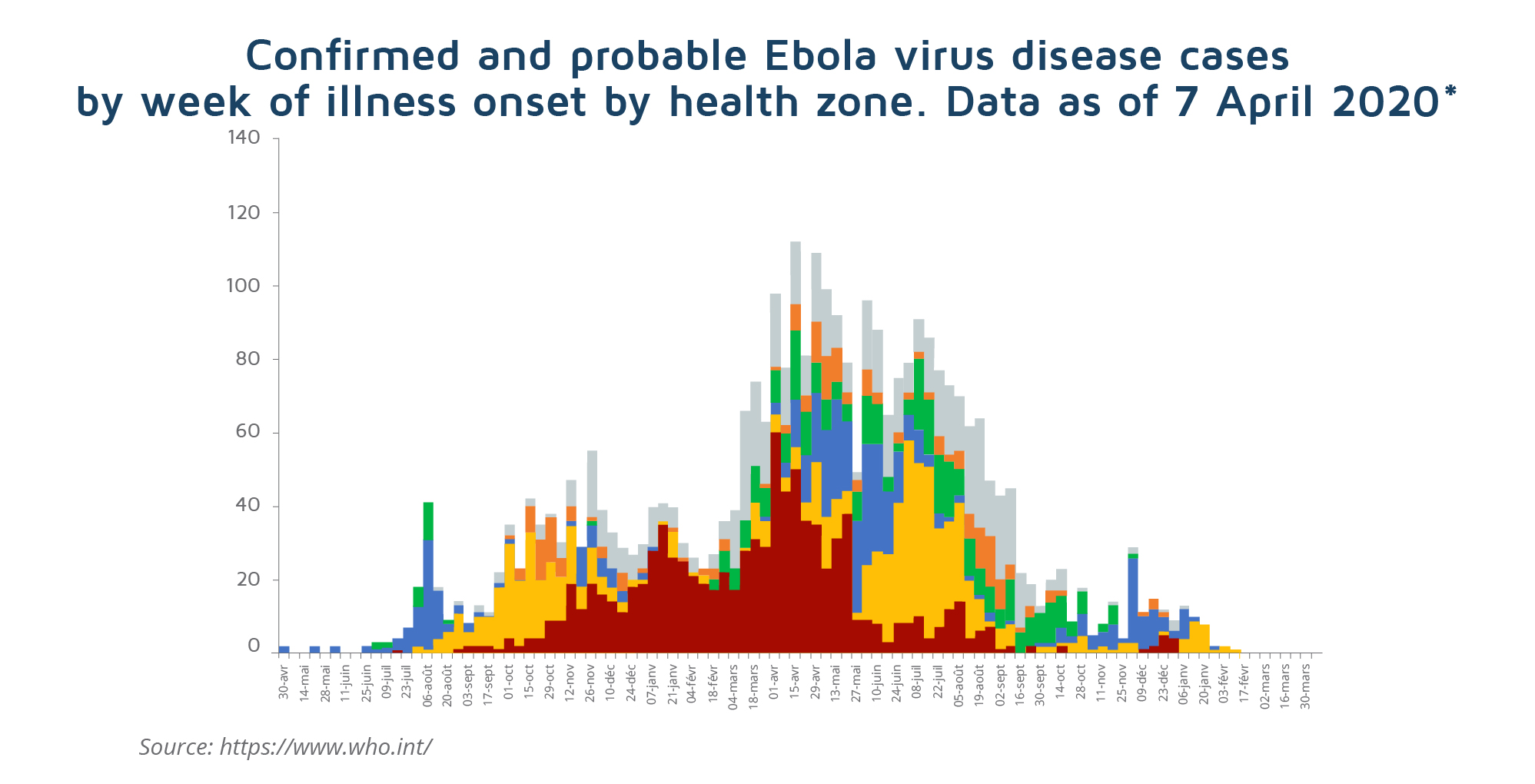
The latest, and the second-worst Ebola outbreak in history, began in August 2018 in the remote north of the Democratic Republic of Congo. The virus spread throughout the major cities and was in danger of spreading across East Africa and beyond. However, since the beginning of the outbreak, only one case has been reported outside of Congo, in neighboring Uganda. As of 7 April 2020, a total of 3,453 cases were reported of which 2,273 ended in death, with an overall case fatality ratio of 66%, according to the country’s Ministry of Health.
On March 3, an Ebola clinic in the city of Beni in Congo celebrated a milestone with their last Ebola patient having been cured. The fight to overcome the Ebola virus seemed just around the corner and the World Health Organization was preparing to officially declare the end of the outbreak after two incubation periods had brought no new cases in Congo. However, the death of a 26-year-old man from Ebola, days prior to the anticipated announcement, has delayed the decision, proving how difficult epidemic eradication can be. In response to the news, the WHO, stated that a case re-emergence was anticipated and that an urgent injection of US$ 20 million was required to ensure the response capacity through to the beginning of May 2020. It is estimated that overall, US$ 734 million financial support was provided for the DRC Ebola response from August 2018 through early December 2019.

Unlike previous Ebola outbreaks, the response to the latest outbreak in Congo has utilized tools that should have helped to mitigate the epidemic more effectively – new Ebola vaccines and therapeutic treatments. Despite this, the outbreak has already lasted for more than 18 months and suffered one of the highest mortality rates. Several factors have contributed to the negative development of this outbreak. The region of the country hit by the virus has a weak healthcare infrastructure and scarce access to water while, most importantly, it is the location of an ongoing conflict between armed groups and civilians.
Meanwhile, from the outset of the intervention approach, aggressive coercive containment measures did not resonate well with the local community’s experiences and beliefs. This led to suspicion and distrust towards international aid, as well as governmental actions. Many organizations, like Medecins sans Frontieres and Human Rights Watch, have concluded that the outbreak could have ended sooner and been less deadly if community engagement and understanding community resistance to the response had been prioritized.
Critical questions must now be asked of all groups involved in the response including the MSF, the World Health Organization, the Ministry of Health, the DRC authorities, United Nations leadership, donor countries and international NGOs, according to a statement from Medecins sans Frontieres.
Currently, the country is dealing with the next episode in its fight against epidemics with the first cases of coronavirus COVID-19 having surfaced in DRC. So far, the country has 235 confirmed coronavirus cases and recorded 20 deaths according to the Africa Center for Disease Control and Prevention. Its troubled experience with tackling Ebola could be a lesson not just for the country’s next epidemic, but globally. Effective communication, community engagement, basic healthcare and hygiene should be central when trying to contain contagious viruses such as Ebola or COVID-19.
In the best-case scenario, if no new cases emerge, Congo would have had to wait another two incubation periods — or 42 days — until the Ebola epidemic can be declared over. However, a second death linked to Ebola announced on April 13th, diminishes the chances of an imminent announcement regarding eradication of the virus. Efforts are already underway to locate anyone who may have been in contact with the deceased in order to offer them the vaccine and to monitor their health status while thousands of other alerts continue to be investigated every day.
The world’s worst Ebola outbreak began in 2015 in West Africa, killing more than 11,300 people and infecting an estimated 28,600 as it swept through Liberia, Guinea and Sierra Leone.
To increase the efficiency of the COVID-19 world response, DevelopmentAid is granting free access to COVID-19-related tenders and grant notices gathered together on its platform.